

Nepal Floods 2026: Devastating Flash Floods Leave Dozens Dead and Hundreds Missing
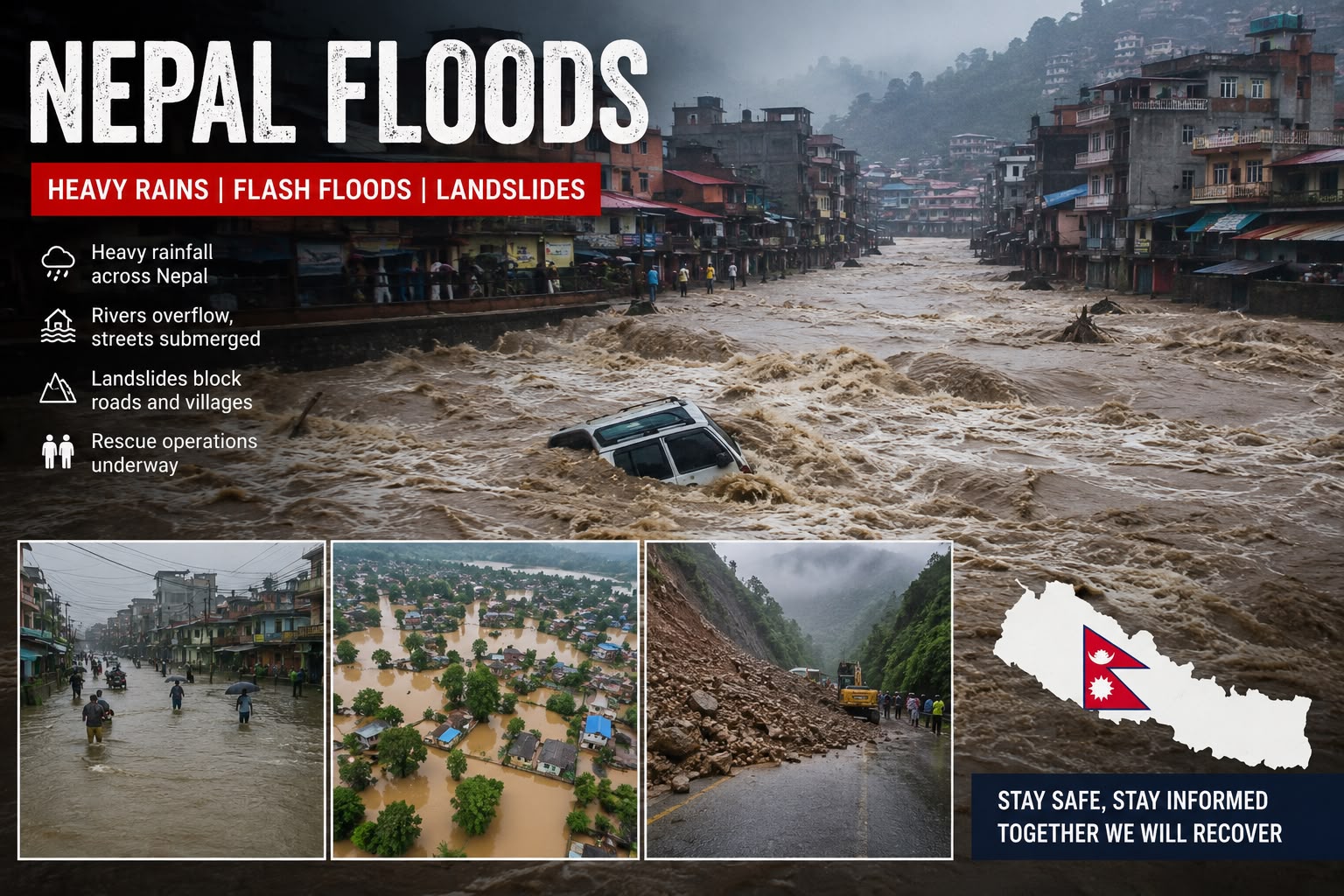
Nepal Floods 2026: Devastating Flash Floods Leave Dozens Dead and Hundreds Missing
Nepal Floods Latest Update: A devastating flash flood in Nepal’s northern Rasuwa district has caused widespread destruction, claiming lives, leaving hundreds of people missing and damaging critical infrastructure near the Nepal–Tibet border. Rescue and relief operations are continuing as authorities assess the full scale of the disaster.
Massive Flash Flood Hits Rasuwa
The disaster struck the mountainous Rasuwa region, where powerful floodwaters swept through settlements and infrastructure along the Bhote Koshi/Lhende river system. Homes, roads, bridges and other facilities were damaged or destroyed as floodwaters moved rapidly through the valley.
The mountainous terrain has made rescue operations particularly difficult, with several areas becoming inaccessible because of damaged roads and bridges.
Rising Death Toll and Missing People
Authorities are continuing to verify casualties as rescue teams reach affected locations. The reported death toll has risen significantly, while hundreds of people remain unaccounted for.
Among those feared missing are foreign nationals, including Indians who were reportedly travelling, working or staying in the affected region. Officials are working to establish the identities and locations of missing people.
Because rescue operations are still underway, casualty figures may change as authorities receive information from remote and isolated areas.
What Triggered the Nepal Flood?
The disaster appears to have been linked to a combination of geological and hydrological factors rather than ordinary seasonal flooding alone.
Initial assessments have pointed to a major rock-and-ice avalanche or landslide that may have temporarily blocked a river before releasing a large volume of water downstream. Geological activity and heavy rainfall may also have contributed to the sudden flooding.
The exact sequence of events is still being investigated.
Major Damage to Infrastructure
The flash flood has caused extensive damage across the region.
Key infrastructure affected includes:
- Roads and highways
- Bridges and river crossings
- Houses and local settlements
- Hydropower projects
- Electricity infrastructure
- Communication networks
- Cross-border transportation routes
The destruction of roads and bridges has significantly complicated rescue and relief operations.
Rescue and Relief Operations
Nepal’s security and emergency agencies have been mobilised to conduct search-and-rescue operations. Personnel from the Nepal Army, Nepal Police and Armed Police Force are involved in the emergency response.
Helicopters and other resources are being used where possible to reach isolated communities. However, unstable slopes, debris, damaged infrastructure and the possibility of additional flooding are creating serious challenges for rescue teams.
Authorities are urging residents in vulnerable areas to remain alert and follow official evacuation and safety instructions.
Concern for Indians
The disaster has also raised concern in India because Indian nationals are reportedly among those missing in the affected region.
Indian authorities and diplomatic officials are expected to coordinate with Nepalese authorities to identify missing citizens and assist those who have been rescued.
Families searching for relatives are being advised to rely on official information and verified helplines rather than unconfirmed social-media reports.
Possible Downstream Impact on India
The Nepal disaster is also important for India because several Himalayan rivers originating in or passing through Nepal eventually flow into the Indian plains.
Any significant rise in river levels can create downstream risks, particularly in states such as Bihar and Uttar Pradesh.
Authorities in downstream areas are therefore expected to closely monitor river levels, rainfall and flood conditions.
Himalayan Region Faces Increasing Disaster Risks
The latest disaster highlights the vulnerability of Himalayan communities to multiple natural hazards.
The region is exposed to:
- Flash floods
- Landslides
- Glacial lake outburst floods
- Earthquakes
- Extreme rainfall
- Avalanches
- Rapid changes in river flow
The combination of steep mountain terrain, changing weather patterns and expanding infrastructure makes disaster preparedness increasingly important across the Himalayan region.
Safety Advisory for Residents and Travellers
People living in or travelling through mountainous areas should exercise extreme caution during periods of heavy rain or flood warnings.
Authorities recommend:
- Stay away from rivers and rapidly flowing water.
- Do not attempt to cross damaged bridges or flooded roads.
- Move to higher ground if instructed by authorities.
- Keep emergency communication devices charged.
- Follow official evacuation instructions.
- Avoid travelling through areas affected by landslides.
- Do not rely on unverified social-media information.
- Contact local authorities or official emergency services if a family member is missing.
What's Hot
-

Asian Games 2026: India Wins Double Kabaddi Gold, Medal Tally Reaches 28
-

Trump Moves to Cancel Nearly Dollar 1 Billion in Congress-Approved Funding
-

PM Modi Calls Bhajan Clubbing “Spectacular”: What It Is All About
-

Tata Aeris Launch 2026: New Compact Sedan to Replace Tigor, Price, Features, Engine, CNG and EV Details
-

India’s Semiconductor Push: Whole-of-Industry Approach to Boost Electronics Manufacturing
-

National Film Awards 2026 Winners: Yami Gautam, Kartik Aaryan, Mammootty, Pushpa 2
-

PM Kisan 24th Installment Date 2026: When Will ?2,000 Be Credited?
-

Xi Jinping's US Visit: What It Means for the World Economy
-

ndia is rapidly expanding renewable energy, but transmission bottlenecks and limited storage are causing clean electricity to be curtailed. Here's what it means.
-

SEO Title: Mahindra Thar OG Launched at INR 10.32 Lakh: Price, Features & Specs