

ndia is rapidly expanding renewable energy, but transmission bottlenecks and limited storage are causing clean electricity to be curtailed. Here's what it means.
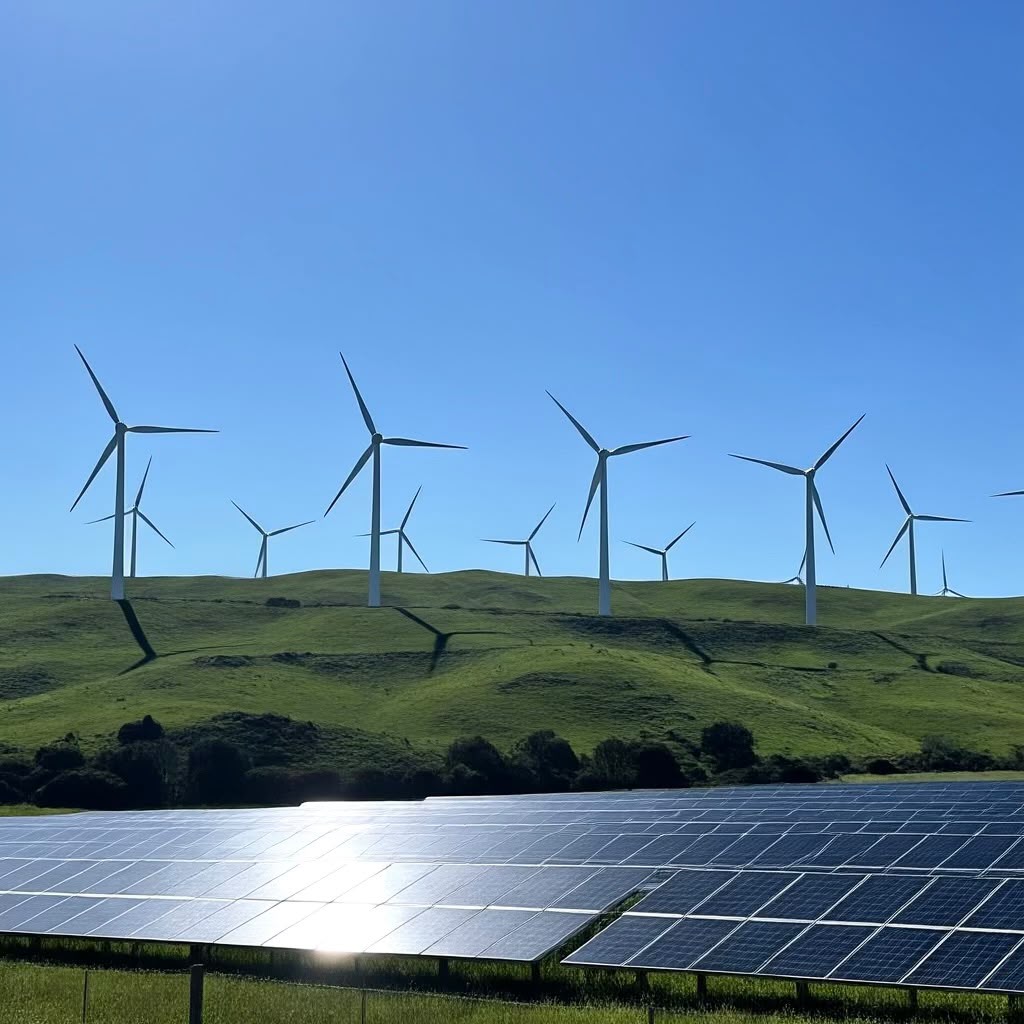
India's renewable-energy capacity is expanding at a remarkable pace, but the country's power grid is facing a new challenge: not all of the clean electricity being generated can be delivered to consumers. Transmission bottlenecks, grid constraints and limited energy-storage capacity are resulting in renewable-energy curtailment.
India has emerged as one of the world's fastest-growing renewable-energy markets. Solar power, in particular, has expanded rapidly, supported by government policies, falling technology costs and growing demand for cleaner electricity.
But the next challenge for India's energy transition is becoming increasingly important: how to efficiently use the renewable electricity that is already being produced.
India Crosses 300 GW of Non-Fossil Capacity
India crossed 300 GW of installed non-fossil-fuel electricity capacity in July 2026, according to the Ministry of New and Renewable Energy.
As of July 31, 2026, India's non-fossil capacity stood at 300.50 GW, including:
- Solar: 164.59 GW
- Wind: 58.14 GW
- Large and small hydro: 57.24 GW
- Bio-power: 11.75 GW
- Nuclear: 8.78 GW
The government said non-fossil sources accounted for more than 54% of India's total installed electricity-generation capacity at that time.
The latest MNRE data shows that India's total renewable-energy capacity reached 295.55 GW by August 31, 2026, including 168.04 GW of solar and 58.52 GW of wind capacity.
But More Renewable Power Is Being Curtailed
The rapid growth of renewable generation is creating pressure on India's transmission network.
Solar plants typically produce their maximum output during daylight hours. When large amounts of solar power are generated at the same time, transmission networks can become congested, particularly in renewable-rich states.
According to information provided by the Ministry of New and Renewable Energy to Parliament, India curtailed approximately 8,133 GWh of solar electricity between April and June 2026 because of transmission bottlenecks and requirements related to grid security.
The period also saw India's peak electricity demand reach around 270 GW.
This creates a striking situation: India can have very high electricity demand while simultaneously being unable to use some available solar generation.
Why Is India Unable to Use All Its Green Electricity?
Renewable-energy curtailment does not necessarily mean that solar or wind power is technically unavailable.
Instead, the electricity system may not have sufficient capacity to move or absorb the electricity at that particular time.
Several factors contribute to the problem.
1. Transmission Bottlenecks
Large solar and wind projects are often located in regions with excellent renewable resources.
However, electricity demand is distributed across the country.
Power therefore needs to travel from renewable-energy hubs to major consumption centres. If transmission capacity is insufficient, renewable generation may have to be reduced.
2. Solar Generation Peaks During the Day
Solar generation is strongest during the middle of the day.
Electricity demand, however, can remain high into the evening, when solar production starts falling.
This creates a mismatch between when electricity is produced and when it is needed.
3. Insufficient Energy Storage
Battery storage and pumped-storage hydropower can shift electricity from periods of high renewable generation to periods of higher demand.
India is rapidly developing storage capacity, but the scale of storage required will increase as renewable penetration grows.
4. Grid-Security Requirements
Electricity grids have to maintain a stable balance between generation and demand.
Sudden changes in renewable generation, transmission congestion and other system conditions can require grid operators to limit renewable output temporarily.
India Is Building More Transmission Capacity
The government has recognised that renewable-energy growth needs to be accompanied by major investments in transmission infrastructure.
The Ministry of Power has said that the transmission system is being planned for integration of more than 500 GW of renewable-energy capacity by 2030.
This is important because India's 2030 target is not simply about building generation capacity.
The country also needs an electricity network capable of moving that power efficiently across regions.
The government's strategy includes expanding inter-state transmission infrastructure and improving the ability of the national grid to accommodate variable renewable generation.
Storage Could Become the Missing Piece
Energy storage could play a critical role in reducing renewable-energy wastage.
A battery energy-storage system can charge when solar generation is high and discharge when electricity demand rises.
For example:
Afternoon: Solar generation is high → batteries charge.
Evening: Solar generation falls → batteries discharge.
This effectively converts intermittent renewable generation into a more flexible electricity resource.
Pumped-storage hydropower can perform a similar function at much larger scales by using electricity to pump water uphill and then generating electricity when required.
The Central Electricity Authority has also studied renewable-energy configurations designed to provide electricity on a more continuous, or round-the-clock, basis as India moves toward its 2030 non-fossil capacity target.
India Has Already Reached 50% Non-Fossil Installed Capacity
India's energy transition has already crossed an important milestone.
According to the Ministry of Power, the country reached 50% non-fossil-fuel share of installed electricity capacity in June 2025, more than five years ahead of the timeline associated with its target.
By December 31, 2025, total installed generation capacity had reached approximately 513.73 GW, of which 266.79 GW, or 51.93%, came from non-fossil sources.
However, installed capacity and actual electricity generation are different measurements.
Having more solar and wind capacity does not automatically mean the same proportion of electricity consumed by the country will come from those sources.
The grid must be capable of integrating and delivering that generation when it is available.
What India Needs to Reduce Renewable-Energy Wastage
India's next stage of renewable-energy development will require investment beyond solar panels and wind turbines.
Stronger Transmission Networks
Transmission projects need to be developed alongside renewable-generation projects so that new capacity can be evacuated without significant constraints.
More Battery Storage
Large-scale battery energy-storage systems can help shift renewable electricity from periods of excess generation to periods of high demand.
Pumped-Storage Projects
Pumped storage can provide large-scale and relatively long-duration energy storage, supporting grid balancing as renewable penetration increases.
Better Forecasting
Improved forecasting of solar and wind generation can help grid operators plan electricity flows more accurately.
Smarter Grid Management
Digital grid-management systems, real-time monitoring, advanced control technologies and smart-meter data can help utilities manage changing electricity flows.
Flexible Power Generation
As renewable generation increases, India's electricity system will also require sufficient flexible generation and other balancing resources to maintain reliability.
Renewable Energy Growth Is Entering a New Phase
India's first major renewable-energy challenge was to build capacity.
The next challenge is to integrate that capacity efficiently into the electricity system.
The country now has hundreds of gigawatts of non-fossil electricity capacity, and solar alone reached 168.04 GW by August 2026.
But the curtailment figures show that generation capacity is only one part of the equation.
The future electricity system will increasingly depend on the combination of:
Renewable Generation + Transmission + Storage + Digital Grid Management + Flexible Power
If these components develop together, India can make better use of the renewable electricity it is generating and reduce the amount of clean energy that has to be curtailed.
The Bigger Picture
India's renewable-energy expansion remains one of the most significant changes taking place in the country's power sector.
The government is targeting 500 GW of non-fossil electricity capacity by 2030, while renewable capacity continues to grow rapidly.
The emerging challenge, therefore, is no longer simply about installing more solar panels or wind turbines.
It is about ensuring that the electricity generated by those assets can be transmitted, stored and consumed at the right time.
The 8,133 GWh of solar electricity curtailed during April-June 2026 illustrates the scale of that challenge.
For India's clean-energy transition, the next big investment opportunity may therefore be just as much about the grid around renewable energy as renewable generation itself.
What's Hot
-

Asian Games 2026: India Wins Double Kabaddi Gold, Medal Tally Reaches 28
-

Trump Moves to Cancel Nearly Dollar 1 Billion in Congress-Approved Funding
-

PM Modi Calls Bhajan Clubbing “Spectacular”: What It Is All About
-
Tata Aeris Launch 2026: New Compact Sedan to Replace Tigor, Price, Features, Engine, CNG and EV Details
-

India’s Semiconductor Push: Whole-of-Industry Approach to Boost Electronics Manufacturing
-

National Film Awards 2026 Winners: Yami Gautam, Kartik Aaryan, Mammootty, Pushpa 2
-

PM Kisan 24th Installment Date 2026: When Will ?2,000 Be Credited?
-

Xi Jinping's US Visit: What It Means for the World Economy
-
ndia is rapidly expanding renewable energy, but transmission bottlenecks and limited storage are causing clean electricity to be curtailed. Here's what it means.
-

SEO Title: Mahindra Thar OG Launched at INR 10.32 Lakh: Price, Features & Specs