

Xi Jinping's US Visit: What It Means for the World Economy
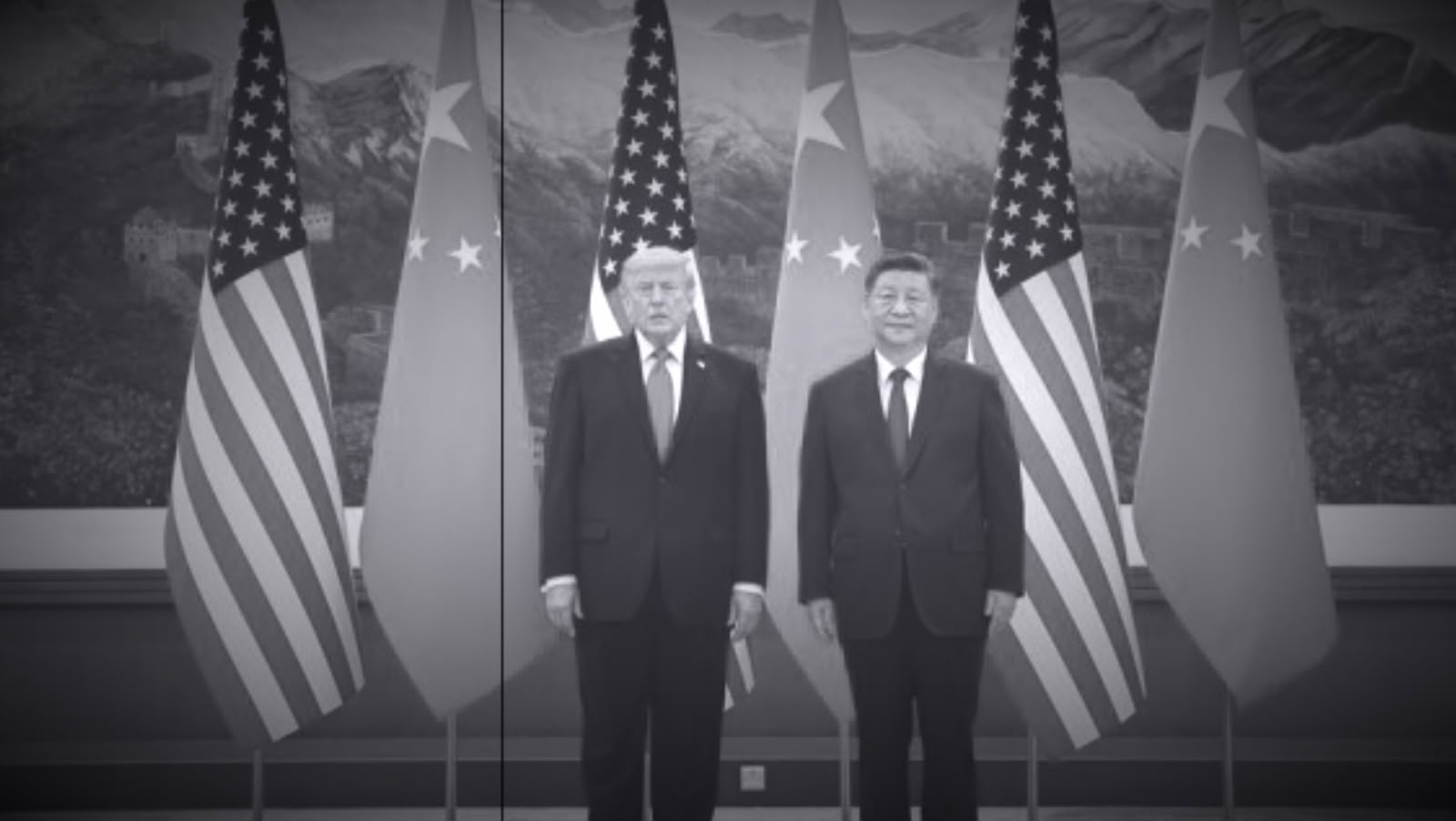
Xi Jinping’s Historic US Visit: What It Could Mean for the World Economy
Washington, September 23, 2026: Chinese President Xi Jinping’s three-day state visit to the United States from September 23 to 25 is attracting attention far beyond Washington and Beijing. The meeting with U.S. President Donald Trump comes as the world's two largest economies continue to navigate trade tensions, technology restrictions, supply-chain concerns and competition over critical minerals.
The economic importance of the visit extends well beyond bilateral U.S.-China trade. Decisions or signals from the two governments could influence global manufacturing, commodity markets, technology companies, currencies and investment flows.
Reuters reports that trade, rare-earth supplies and artificial intelligence are among the key issues expected to feature in the discussions.
Why the Trump-Xi Meeting Matters to the Global Economy
The United States and China occupy central positions in global trade and manufacturing. China is a major exporter of manufactured goods and a significant supplier of industrial inputs, while the United States remains a major consumer market and a leading source of technology, finance and investment.
That means changes in the economic relationship between Washington and Beijing can affect companies and consumers well beyond the two countries.
The current visit comes as both sides seek to manage a fragile trade relationship rather than simply focus on traditional diplomatic protocol. Reuters has reported that maintaining stability in the trade relationship is a major priority for the summit.
1. Global Trade Could Get More Predictable
One of the biggest economic implications would come from any agreement that reduces uncertainty around tariffs and trade restrictions.
Businesses making products in China or sourcing components from Chinese suppliers have had to account for changing U.S. trade policies. Greater clarity could make it easier for companies to plan production, investment and inventory levels.
However, a summit does not automatically remove existing trade barriers. The economic impact will depend on the specific commitments announced and whether they are implemented.
2. Supply Chains Are a Major Focus
The U.S.-China relationship has become increasingly important for global supply chains.
Industries ranging from electronics and automobiles to renewable energy and industrial equipment depend on components and raw materials linked to China.
Rare earths are particularly important because they are used in electric vehicles, electronics, renewable-energy equipment, defence technologies and other advanced industries.
The availability and export of these materials is therefore a major economic issue for manufacturers around the world. Reuters identifies rare-earth supply as one of the central subjects surrounding the Trump-Xi meeting.
What a stable supply could mean
If the two countries reach greater clarity over critical-mineral supplies, manufacturers could face less uncertainty over raw-material availability.
If negotiations fail to ease tensions, companies may continue accelerating efforts to diversify suppliers and develop alternative sources.
3. Technology and Artificial Intelligence
Artificial intelligence has become another major economic dimension of the U.S.-China relationship.
The two countries are competing in areas including AI models, semiconductors, computing infrastructure and advanced technology.
The outcome of discussions over AI and technology could affect companies involved in chips, cloud computing, data centres and advanced computing.
The broader global AI economy is already expanding rapidly. WTO data cited by the Financial Times showed a 42% year-on-year increase in trade of AI-related goods in the first quarter of 2026, compared with 7% growth in non-AI goods.
This makes technology policy between Washington and Beijing increasingly relevant to global trade.
4. Semiconductor Industry Could Remain in Focus
Semiconductors are among the most strategically important products in the global economy.
Restrictions on advanced chips and semiconductor technology can affect technology companies, electronics manufacturers, data-centre operators and AI developers.
Any indication that Washington and Beijing are prepared to ease technology-related restrictions could influence business expectations. Conversely, tighter controls could encourage companies to invest further in domestic and alternative supply chains.
For global businesses, the important issue will be whether the meeting produces specific technology agreements or merely maintains dialogue.
5. Currency Markets Will Be Watching the Summit
The Chinese yuan has already attracted attention ahead of Xi's visit.
Reuters reported that the yuan reached its strongest level against the U.S. dollar in more than three and a half years on September 21, while China's central bank signalled greater tolerance for yuan appreciation. Analysts cited by Reuters cautioned that this does not necessarily mean the currency has entered a sustained appreciation cycle.
The direction of the yuan matters beyond China because currency movements can affect:
- Export competitiveness
- Import costs
- Commodity prices
- Asian currencies
- Global investment flows
- Multinational company earnings
6. Commodity Markets Could React
Any improvement or deterioration in U.S.-China relations can influence commodity markets.
China is one of the world's largest consumers of energy and industrial commodities. Changes in expectations around Chinese manufacturing, trade and investment can therefore affect demand for oil, metals and other raw materials.
Critical minerals are particularly important because of their role in electric vehicles, batteries, electronics and clean-energy technologies.
7. Global Manufacturing Could Benefit From Greater Stability
Manufacturers generally need predictable access to markets, components and raw materials.
A more stable U.S.-China economic relationship could reduce some of the uncertainty faced by multinational companies.
However, the longer-term trend toward supply-chain diversification is unlikely to disappear simply because of one diplomatic meeting.
Companies may continue following a "China plus one" strategy, maintaining Chinese production while expanding manufacturing capacity in countries such as India, Vietnam, Mexico and others.
8. India Could See Both Opportunities and Challenges
The economic implications also matter for India.
If U.S.-China trade tensions ease significantly, some companies could continue relying heavily on Chinese manufacturing networks. That could reduce the immediate pressure to shift production elsewhere.
On the other hand, continued diversification of global supply chains could create opportunities for India in areas such as:
- Electronics manufacturing
- Solar equipment
- Electric vehicles
- Batteries
- Auto components
- Pharmaceuticals
- Engineering goods
- Industrial manufacturing
India's opportunity will depend on its ability to provide competitive costs, infrastructure, skilled manpower and reliable supply chains.
9. Financial Markets Could Respond to New Signals
Investors will be watching the summit for signals about tariffs, technology restrictions, supply chains and future negotiations.
A reduction in uncertainty could influence investor sentiment toward companies exposed to international trade.
At the same time, markets can react differently depending on whether announcements represent concrete agreements or simply diplomatic statements.
Therefore, the immediate market reaction should not necessarily be interpreted as evidence of a lasting change in the global economy.
10. Multinational Companies Are Closely Watching
The importance of the meeting is reflected in the presence of major technology and business leaders around the White House state dinner.
Reuters reported that executives including Jeff Bezos, Sundar Pichai, Sam Altman, Tim Cook, Elon Musk, Jensen Huang and Michael Dell are expected to attend.
Their presence highlights how closely the technology and business communities are connected to the U.S.-China economic relationship.
For multinational corporations, issues such as market access, technology controls, tariffs and supply-chain security have become strategic business decisions rather than purely political questions.
11. Could This Reduce Global Inflation?
The answer depends on the outcome.
If lower trade barriers and more stable supply chains reduce costs for businesses, some of those savings could eventually benefit consumers.
But tariffs and trade restrictions can also increase costs for imported products and components.
The Federal Reserve is already monitoring persistent inflation pressures, including the effects of tariffs. Reuters reported on September 22 that Richmond Fed President Tom Barkin said inflation concerns remained significant and that tariff shocks can have effects that persist beyond the initial disruption.
Therefore, the economic impact of the Trump-Xi meeting could extend into monetary-policy discussions if trade developments materially affect prices.
12. What Happens Next May Matter More Than the Ceremony
The highly visible White House welcome for Xi Jinping is symbolically significant, but the economic consequences will depend on what happens during and after the negotiations.
Markets and businesses will be looking for concrete developments involving:
Trade: Tariffs, market access and purchasing commitments.
Rare earths: Supply security and export arrangements.
Technology: Semiconductor and AI-related restrictions.
Investment: Cross-border investment and business access.
Supply chains: Measures to reduce disruption and uncertainty.
Future talks: Whether Washington and Beijing establish mechanisms for continued economic negotiations.
What It Could Mean for the Global Economy
The Xi Jinping visit comes at a time when the global economy is already dealing with geopolitical tensions, changing trade policies, energy-market uncertainty and rapid technological change.
A more stable U.S.-China relationship could reduce some of the uncertainty surrounding global trade and supply chains. Continued confrontation, meanwhile, could encourage further economic fragmentation and diversification of manufacturing networks.
The outcome therefore matters not only to Washington and Beijing but also to Europe, India, Southeast Asia, commodity-producing economies and multinational businesses.
The Bottom Line
Xi Jinping's historic visit to Washington is more than a diplomatic event. Trade, technology, critical minerals, supply chains and currencies make the U.S.-China relationship an important driver of the global economic environment.
The key question for the world economy is not simply whether the two leaders hold a successful meeting, but whether they can translate diplomatic engagement into specific and durable economic arrangements.
For businesses and investors, the most important signals will come from the details of any agreements announced after the summit and their subsequent implementation.
What's Hot
-

Asian Games 2026: India Wins Double Kabaddi Gold, Medal Tally Reaches 28
-
Trump Moves to Cancel Nearly Dollar 1 Billion in Congress-Approved Funding
-

PM Modi Calls Bhajan Clubbing “Spectacular”: What It Is All About
-

Tata Aeris Launch 2026: New Compact Sedan to Replace Tigor, Price, Features, Engine, CNG and EV Details
-

India’s Semiconductor Push: Whole-of-Industry Approach to Boost Electronics Manufacturing
-

National Film Awards 2026 Winners: Yami Gautam, Kartik Aaryan, Mammootty, Pushpa 2
-

PM Kisan 24th Installment Date 2026: When Will ?2,000 Be Credited?
-
Xi Jinping's US Visit: What It Means for the World Economy
-
ndia is rapidly expanding renewable energy, but transmission bottlenecks and limited storage are causing clean electricity to be curtailed. Here's what it means.
-

SEO Title: Mahindra Thar OG Launched at INR 10.32 Lakh: Price, Features & Specs