

Smart Meter Project in India: Current Status, Progress, and Future Outlook
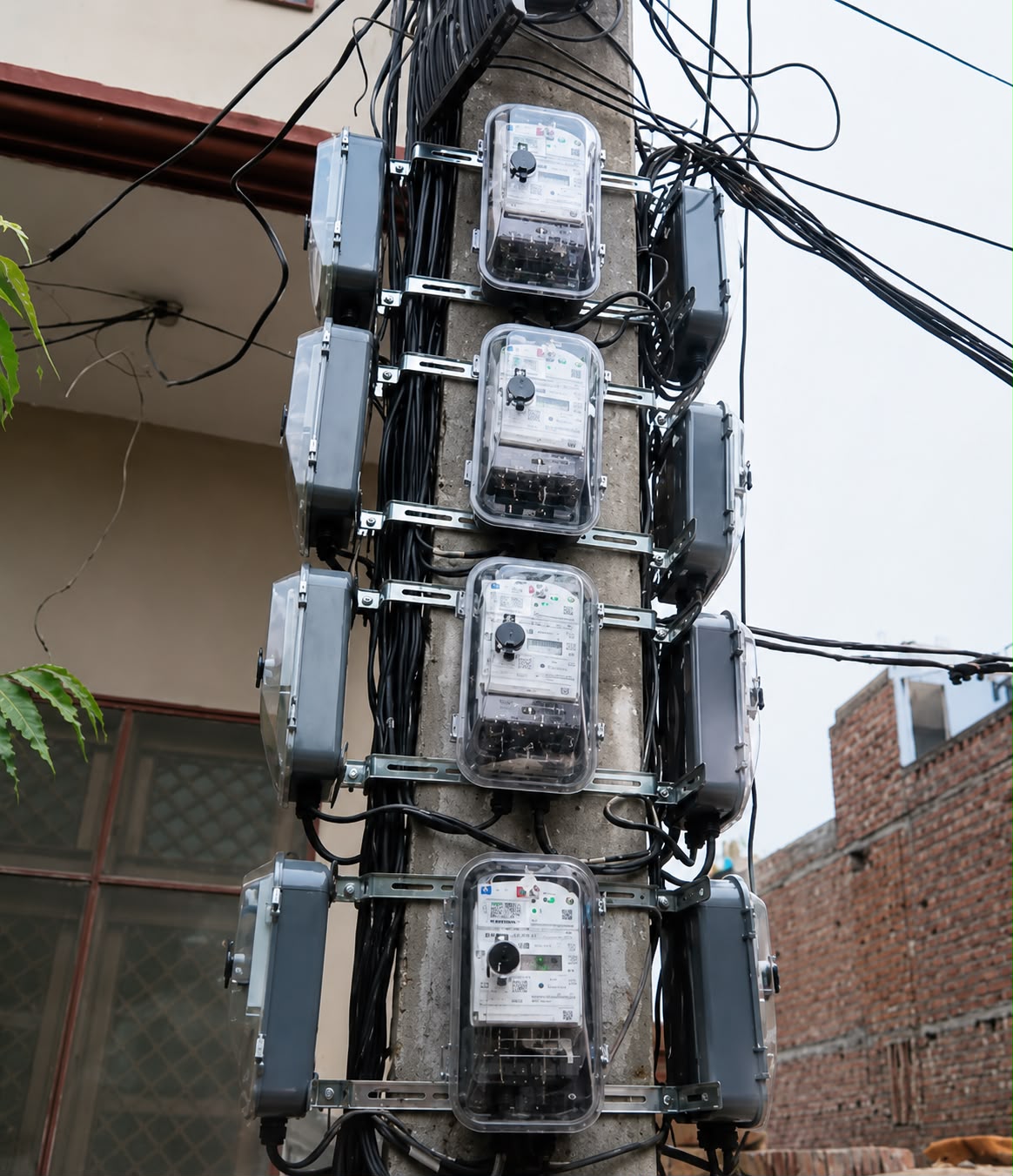
Smart Meter Project in India: Current Status, Progress, and Future Outlook
Introduction
The Government of India has launched several initiatives to replace conventional electricity meters with advanced smart prepaid meters that enable real-time monitoring, improve billing efficiency, and enhance consumer participation in energy management.
The nationwide rollout is being implemented primarily under the Revamped Distribution Sector Scheme (RDSS), with the objective of improving operational efficiency, reducing financial losses of power distribution companies (DISCOMs), and creating a digitally connected power infrastructure.
Evolution of Smart Metering in India
India's smart metering journey began through pilot projects initiated by utilities and government agencies to evaluate Advanced Metering Infrastructure (AMI). Positive results encouraged the government to expand deployment on a national scale.
Major milestones include:
- Initial smart meter pilot projects (2012–2016)
- National Smart Grid Mission (NSGM)
- Smart Meter National Programme (SMNP)
- Revamped Distribution Sector Scheme (RDSS)
- State-level smart metering initiatives by DISCOMs
Today, smart meters have evolved from a technology demonstration project into a nationwide infrastructure modernization programme.
Government Vision
The Government of India envisions smart metering as an essential pillar of the Digital India and Power Sector Reform initiatives.
The primary objectives include:
- Modernizing electricity distribution
- Improving financial sustainability of DISCOMs
- Reducing Aggregate Technical & Commercial (AT&C) losses
- Eliminating manual meter reading
- Enhancing billing accuracy
- Increasing revenue collection
- Empowering consumers with real-time consumption information
- Supporting renewable energy integration
- Building the foundation for smart grids
Current Status of Smart Meter Rollout
India has sanctioned smart meter projects covering millions of electricity consumers across nearly all states and union territories.
Key highlights include:
- Smart meter deployment is progressing under RDSS.
- Several crore smart meters have already been installed.
- Large-scale procurement and installation contracts are underway.
- Multiple states are implementing prepaid smart metering.
- Urban as well as rural areas are being included in the rollout.
The programme continues to expand every year as utilities accelerate installations.
Role of Advanced Metering Infrastructure (AMI)
Smart meters function as part of a larger Advanced Metering Infrastructure (AMI), which includes:
- Smart electricity meters
- Communication networks
- Data concentrator units
- Head-End System (HES)
- Meter Data Management System (MDMS)
- Utility billing systems
- Consumer mobile applications
- Command and control centres
AMI enables two-way communication between consumers and utilities.
Benefits for Distribution Companies (DISCOMs)
Smart metering provides significant operational and financial benefits.
These include:
Revenue Improvement
- Accurate billing
- Timely payments
- Reduction in billing disputes
- Improved collection efficiency
Operational Efficiency
- Remote meter reading
- Remote connect/disconnect
- Automatic outage detection
- Faster fault identification
- Reduced field visits
Loss Reduction
- Energy accounting
- Theft detection
- Tamper alerts
- Load analysis
- Identification of high-loss areas
Better Planning
- Demand forecasting
- Load balancing
- Infrastructure planning
- Asset optimization
Benefits for Consumers
Smart meters empower electricity consumers by providing greater transparency and control.
Consumers benefit through:
- Real-time energy consumption monitoring
- Mobile app access
- Online recharge for prepaid meters
- Daily and monthly consumption reports
- Billing transparency
- Reduced estimated billing
- Faster complaint resolution
- Alerts for high electricity usage
- Better energy conservation
Consumers can also modify their electricity usage based on tariff periods, helping reduce electricity bills.
Technology Features
Modern smart meters deployed in India typically include:
- Two-way communication
- Remote firmware updates
- Event logging
- Tamper detection
- Load profiling
- Prepaid functionality
- Net metering support
- Time-of-Day (ToD) tariffs
- Remote connect/disconnect
- Secure encrypted communication
- Interoperability with utility systems
Communication Technologies
Different communication technologies are used depending on geography and utility requirements.
Common technologies include:
- RF Mesh
- Cellular (2G/3G/4G/LTE)
- NB-IoT
- PLC (Power Line Communication)
- Hybrid communication networks
- Fiber-based communication for backbone connectivity
Major Challenges
Despite rapid progress, several challenges remain.
Consumer Awareness
Many consumers are unfamiliar with prepaid smart meters and often have concerns regarding billing accuracy and privacy.
Infrastructure
Remote locations require reliable communication networks and supporting digital infrastructure.
Utility Readiness
DISCOMs need upgraded IT systems, trained personnel, and cybersecurity capabilities.
Supply Chain
Manufacturing, logistics, and installation capacity must keep pace with the scale of deployment.
Data Management
Millions of smart meters generate enormous volumes of data that require secure storage, processing, and analytics.
Cybersecurity
As smart meters become connected devices, cybersecurity is increasingly important.
Utilities are investing in:
- Secure communication protocols
- Encryption
- Authentication mechanisms
- Access control
- Security monitoring
- Firmware security
- Compliance with national cybersecurity standards
Protecting consumer data and grid operations is a critical priority.
Role in Smart Grids
Smart meters form the foundation of India's future smart grid ecosystem.
They enable:
- Demand response programmes
- Distributed energy resources
- Rooftop solar integration
- Electric vehicle charging management
- Battery energy storage integration
- Grid automation
- Real-time energy balancing
Future Outlook
The coming years will see rapid expansion of India's smart metering ecosystem. As installations increase, utilities are expected to make greater use of data analytics, artificial intelligence, and automation to optimize grid operations and improve customer service. Smart meters will also play an important role in supporting renewable energy integration, electric vehicle adoption, dynamic electricity pricing, and the development of smart cities.
In the long term, smart metering is expected to transform electricity distribution from a largely manual process into a fully digital, data-driven system. This transformation will improve operational efficiency, reduce losses, strengthen the financial health of DISCOMs, and provide consumers with greater transparency and control over their energy usage. The nationwide rollout represents a foundational step toward building a resilient, efficient, and sustainable power sector for India.
What's Hot
-

Asian Games 2026: India Wins Double Kabaddi Gold, Medal Tally Reaches 28
-

Trump Moves to Cancel Nearly Dollar 1 Billion in Congress-Approved Funding
-

PM Modi Calls Bhajan Clubbing “Spectacular”: What It Is All About
-

Tata Aeris Launch 2026: New Compact Sedan to Replace Tigor, Price, Features, Engine, CNG and EV Details
-
India’s Semiconductor Push: Whole-of-Industry Approach to Boost Electronics Manufacturing
-

National Film Awards 2026 Winners: Yami Gautam, Kartik Aaryan, Mammootty, Pushpa 2
-
PM Kisan 24th Installment Date 2026: When Will ?2,000 Be Credited?
-

Xi Jinping's US Visit: What It Means for the World Economy
-
ndia is rapidly expanding renewable energy, but transmission bottlenecks and limited storage are causing clean electricity to be curtailed. Here's what it means.
-

SEO Title: Mahindra Thar OG Launched at INR 10.32 Lakh: Price, Features & Specs