

India Beat New Zealand by 4 Runs in 2nd ODI, Take 2-0 Lead
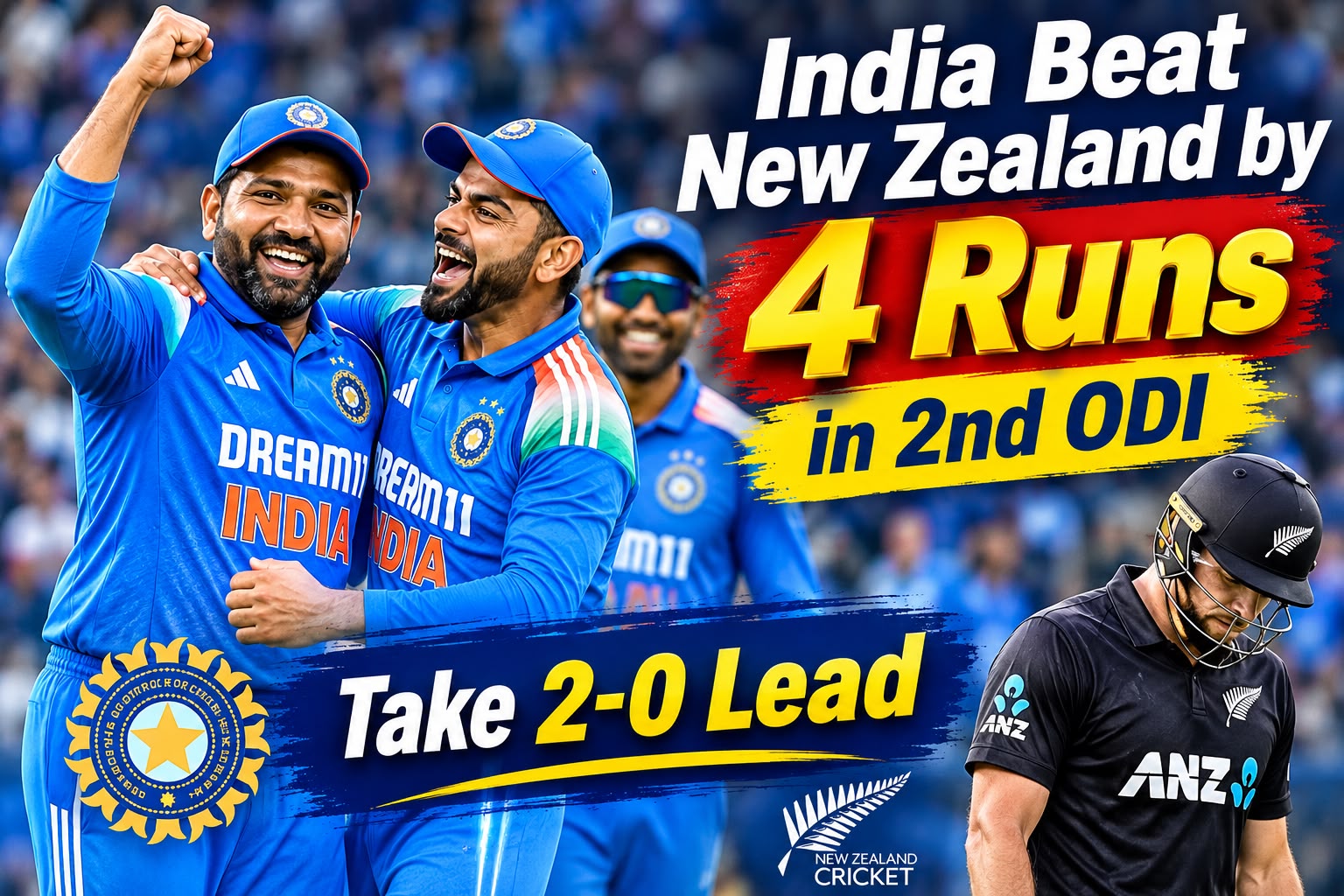
India Beat New Zealand by 4 Runs in 2nd ODI: Gurnoor Brar's Four-Wicket Haul Helps Team India Take 2-0 Series Lead
India vs New Zealand 2nd ODI 2026: Team India registered a thrilling four-run victory over New Zealand in the second One Day International (ODI) at Wellington on November 7, 2026. In a rain-affected encounter, India secured victory through the Duckworth-Lewis-Stern (DLS) method after New Zealand were bowled out for 134 runs and India reached 113/7 in 26 overs.
Indian fast bowler Gurnoor Brar emerged as the biggest star of the match, producing an outstanding bowling performance of 4 wickets for 30 runs. His impressive spell played a crucial role in restricting the New Zealand batting lineup on a challenging surface.
Despite a difficult start to their run chase, India's middle-order batters, particularly Shreyas Iyer and KL Rahul, helped the visitors remain ahead of the required DLS target.
With this victory, India have taken a commanding 2-0 lead in the five-match ODI series and moved one step closer to securing the series.
India vs New Zealand 2nd ODI: Match Overview
The second ODI was played at Sky Stadium in Wellington, New Zealand. Rain affected the match schedule, resulting in a delayed start and a reduction in the contest to 47 overs per side.
India won the toss and elected to bowl first, a decision that proved beneficial as the Indian bowlers exploited the conditions and put New Zealand under considerable pressure.
|
Match Details |
Information |
|
Match |
2nd ODI |
|
Series |
India Tour of New Zealand 2026 |
|
Date |
November 7, 2026 |
|
Venue |
Sky Stadium, Wellington |
|
Toss |
India elected to bowl |
|
New Zealand |
134 all out (41 overs) |
|
India |
113/7 (26 overs) |
|
Result |
India won by 4 runs (DLS) |
|
Player of the Match |
Gurnoor Brar |
|
Series Lead |
India 2-0 |
New Zealand Batting: Indian Bowlers Dominate the First Innings
New Zealand had a difficult beginning after being asked to bat first. The Indian bowling attack immediately put pressure on the home team's top order, making it difficult for the batters to settle at the crease.
Auqib Nabi Dar provided India with an excellent start by removing Tim Seifert and Will Young. Both opening batters departed cheaply, leaving New Zealand struggling during the initial overs.
Anshul Kamboj added to the pressure by dismissing Henry Nicholls, reducing the hosts to 23/3.
The early wickets created an opportunity for India's bowlers to control the match. New Zealand's middle order was unable to establish the partnerships required to rebuild the innings.
Daryl Mitchell's Fighting Half-Century
Daryl Mitchell was the standout performer for New Zealand with the bat. While wickets continued to fall around him, Mitchell displayed patience and determination to keep his team's innings moving.
He scored 55 runs from 104 deliveries, including five boundaries and two sixes.
Mitchell received valuable support from New Zealand captain Mitchell Santner, who contributed 31 runs from 38 balls.
The pair added 59 runs for the sixth wicket, providing New Zealand with some stability after the early batting collapse.
However, Axar Patel eventually dismissed Mitchell, ending the partnership and shifting the momentum back towards India.
New Zealand's lower order could not provide much resistance, and the hosts were bowled out for 134 runs in 41 overs.
Gurnoor Brar Delivers a Match-Winning Bowling Performance
Gurnoor Brar was undoubtedly one of the biggest talking points of the match.
The young Indian fast bowler delivered an impressive spell of 10 overs, conceding only 30 runs and taking four wickets. His figures included two maiden overs.
Brar consistently troubled New Zealand's batters with his pace, bounce and disciplined line and length.
One of the most important moments came during his double-wicket maiden over, when he dismissed Tom Latham and Glenn Phillips in quick succession.
He later returned to remove Mitchell Santner and Nathan Smith, preventing New Zealand from building a competitive total.
His four-wicket performance earned him the Player of the Match award.
India's Bowling Scorecard
|
Indian Bowler |
Overs |
Runs |
Wickets |
|
Arshdeep Singh |
7 |
16 |
0 |
|
Auqib Nabi Dar |
7 |
31 |
2 |
|
Anshul Kamboj |
8 |
25 |
2 |
|
Gurnoor Brar |
10 |
30 |
4 |
|
Axar Patel |
9 |
28 |
2 |
The bowling performance was a collective effort. Arshdeep Singh also maintained excellent control, conceding only 16 runs in seven overs despite not taking a wicket.
India's Run Chase: Early Wickets Create Pressure
India began their chase of 135 runs with confidence, but New Zealand's fast bowlers made the task much more difficult than expected.
Jacob Duffy provided the home team with an excellent start, dismissing Indian captain Shubman Gill for a golden duck and removing Virat Kohli for just seven runs.
Rohit Sharma attempted to provide some momentum with 23 runs, but New Zealand continued to pick up wickets.
India found themselves under pressure after losing important top-order batters early in the innings.
The challenging Wellington conditions made batting difficult, with the ball moving off the surface and providing assistance to the fast bowlers.
Shreyas Iyer and KL Rahul Stabilise the Innings
With India losing wickets, the responsibility shifted to the middle order.
Shreyas Iyer played an important innings of 30 runs from 46 deliveries. He focused on building the innings and preventing further damage during a difficult phase of the chase.
KL Rahul also played a crucial role by remaining unbeaten on 26 runs.
Their contributions helped India move closer to the required target despite New Zealand's continued bowling pressure.
Kyle Jamieson also made an important contribution with three wickets, while Jacob Duffy finished with three wickets as well.
When rain interrupted the match, India had reached 113/7 in 26 overs.
How India Won by Four Runs: Understanding the DLS Method
The Duckworth-Lewis-Stern method, commonly known as DLS, is used in limited-overs cricket when rain or other interruptions prevent a match from being completed as originally scheduled.
The system calculates a revised target or par score based on the overs available and the wickets remaining.
In this match, New Zealand had scored 134 runs before being bowled out.
India needed to chase 135 runs to win. However, rain stopped the game when India were batting at 113/7 after 26 overs.
At that stage, India's DLS par score was 109 runs.
Since India had scored 113 runs, they were four runs ahead of the required par score.
As a result, the match officials declared India the winners by four runs under the DLS method.
This made the contest particularly exciting, as New Zealand were still in the match and India had three wickets remaining when the rain interruption brought the game to an end.
New Zealand Bowling Performance: Jamieson and Duffy Fight Back
Although New Zealand were unable to defend their total, their bowling attack made India's chase extremely competitive.
Jacob Duffy was particularly effective with the new ball. His early wickets of Shubman Gill and Virat Kohli put India under immediate pressure.
Kyle Jamieson also delivered an impressive spell, using his height and bounce to trouble the Indian batters.
New Zealand Bowling Figures
|
Bowler |
Overs |
Runs |
Wickets |
|
Jacob Duffy |
7 |
35 |
3 |
|
Kyle Jamieson |
10 |
35 |
3 |
|
Matthew Fisher |
4 |
23 |
1 |
The New Zealand bowlers managed to take seven Indian wickets before rain ended the contest.
Despite their efforts, India's score remained above the DLS par score, allowing the visitors to secure the victory.
Complete New Zealand Batting Scorecard
|
Batter |
Runs |
Balls |
|
Tim Seifert |
0 |
5 |
|
Will Young |
6 |
17 |
|
Henry Nicholls |
11 |
26 |
|
Daryl Mitchell |
55 |
104 |
|
Tom Latham |
7 |
22 |
|
Glenn Phillips |
0 |
4 |
|
Mitchell Santner |
31 |
38 |
|
Nathan Smith |
3 |
9 |
|
Kyle Jamieson |
7 |
14 |
|
Blair Tickner |
2 |
5 |
|
Jacob Duffy |
1* |
3 |
|
Extras |
11 |
— |
|
Total |
134 all out |
41 overs |
India's Batting Highlights
|
Batter |
Runs |
|
Shubman Gill |
0 |
|
Rohit Sharma |
23 |
|
Virat Kohli |
7 |
|
Shreyas Iyer |
30 |
|
KL Rahul |
26* |
|
Axar Patel |
7 |
|
Naman Dhir |
12 |
|
Anshul Kamboj |
1 |
India finished at 113/7 in 26 overs when rain forced the match to be abandoned.
India Take a 2-0 Lead in the Five-Match ODI Series
The second ODI victory has given India a strong advantage in the ongoing series.
India had already won the opening ODI by five wickets under the DLS method. The second consecutive victory has increased their series lead to 2-0.
New Zealand now face the challenge of winning the remaining matches to make a comeback.
The third ODI is scheduled for November 10, 2026, in Hamilton. It will be an important opportunity for New Zealand to respond, while India will aim to seal the series with another victory.
Four Major Takeaways from India's Victory
1. Gurnoor Brar strengthens India's pace attack
Brar's four-wicket performance demonstrated his ability to perform under challenging overseas conditions. His consistent bowling and ability to take wickets at important moments made a significant difference.
2. India's bowling unit delivers collectively
The Indian bowlers worked together to restrict New Zealand to just 134 runs. Auqib Nabi Dar and Anshul Kamboj provided early breakthroughs, while Axar Patel controlled the middle overs.
3. KL Rahul shows composure under pressure
Rahul's unbeaten 26 runs proved valuable during India's difficult chase. His ability to stay at the crease helped India remain ahead of the DLS requirement.
4. New Zealand's bowling remains a challenge
Despite their modest batting total, New Zealand's bowlers made India work hard for the victory. Jacob Duffy and Kyle Jamieson demonstrated that the home side remains competitive.
Conclusion: India Move Closer to ODI Series Victory
India's four-run victory against New Zealand in the second ODI was a thrilling contest that highlighted the importance of disciplined bowling, composure and adaptability.
Gurnoor Brar emerged as the match's biggest performer with four wickets, while Daryl Mitchell's half-century was the major positive for New Zealand.
India's batting lineup faced considerable pressure, but KL Rahul and Shreyas Iyer helped the team remain competitive before rain interrupted the match.
With a 2-0 advantage in the five-match series, India are now in a strong position. The upcoming third ODI in Hamilton will be crucial for both teams, as India look to seal the series and New Zealand attempt to keep their hopes alive.
For Indian cricket fans, this was another memorable victory in an exciting overseas ODI campaign.
What's Hot
-

India WTC Final 2027 Qualification Chances: What Team India Needs
-
India Score 720/9 vs New Zealand: Highest Away Test Total, Historic Record
-

Georgia Beats South Carolina 34-6 to Clinch 2026 SEC Championship Berth
-

PM E-DRIVE Scheme Crosses 30 Lakh EV Sales Milestone
-

PM Modi's FICCI Speech 2026: Listen to Gandhi, Promote Swadeshi and Make India Self-Reliant
-

Trump, Xi and Putin Summit 2026: Key Agenda, Nuclear Weapons, Iran War and Ukraine
-

EV Sales Surge 69% in India During 2026 Festive Season
-

What Is ASEAN? 11 Member Countries and Why It Matters to India
-

India vs New Zealand 4th ODI: India Bowled Out for 89, Lose by 244 Runs
-

PM Modi to Launch Rs.15,600 Crore Development Projects in Bengaluru Today