

Trump, Xi and Putin Summit 2026: Key Agenda, Nuclear Weapons, Iran War and Ukraine
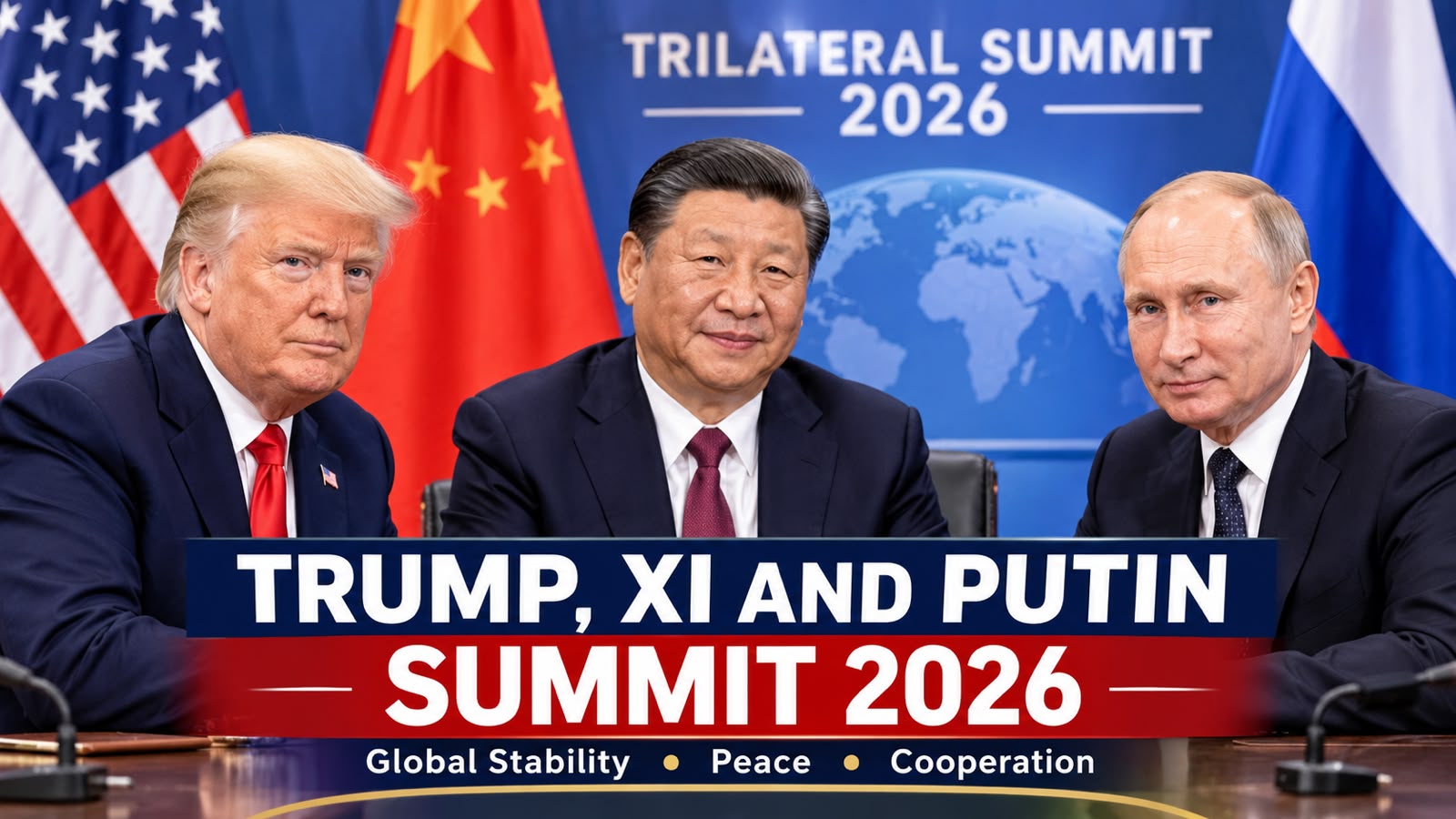
Trump, Xi Jinping and Putin Gather for Historic Trilateral Summit: What Is on the Agenda?
In a major diplomatic development, US President Donald Trump, Chinese President Xi Jinping and Russian President Vladimir Putin have gathered in Shenzhen, China, for a historic trilateral summit on November 19, 2026. The meeting is taking place on the sidelines of the Asia-Pacific Economic Cooperation (APEC) summit and brings together the leaders of three of the world's most powerful countries.
The meeting is particularly significant because it represents the first formal trilateral summit involving the leaders of the United States, China and Russia. Discussions are expected to cover some of the world's most pressing geopolitical challenges, including nuclear weapons reduction, the ongoing conflict involving Iran, the Russia-Ukraine war, international security and global economic relations.
The summit comes at a time when international relations are facing considerable uncertainty, with tensions over military conflicts, energy security, trade restrictions and competition in advanced technologies.
Why Are Trump, Xi Jinping and Putin Meeting?
The three leaders are meeting at a critical moment in international politics. The United States, China and Russia have different strategic priorities, but their decisions have significant consequences for global security, international trade and the world economy.
China is seeking to strengthen its position as a major global power, Russia wants to maintain its strategic influence and reduce its international isolation, while the United States is looking to protect its global interests and address growing security challenges.
According to China's Foreign Ministry, the summit will provide an opportunity for the three leaders to exchange views on safeguarding world peace and maintaining strategic stability among major powers.
Although the meeting has attracted considerable international attention, analysts caution that major agreements should not be expected immediately.
Six Major Issues on the Trump-Xi-Putin Summit Agenda
1. Nuclear Weapons Reduction and Global Security
Nuclear disarmament is expected to be one of the most important topics during the meeting.
President Donald Trump has expressed interest in a new agreement aimed at reducing nuclear weapons involving the United States, Russia and China.
The issue has become increasingly important following the expiration of the New START nuclear arms control treaty between the United States and Russia in February 2026.
The previous agreement placed limits on the strategic nuclear arsenals of Washington and Moscow. However, China has so far been reluctant to participate in a similar arrangement, partly because its nuclear arsenal is significantly smaller than those of the United States and Russia.
A possible new framework involving all three countries could have major implications for international security, although reaching an agreement would be challenging.
2. Iran War and Middle East Tensions
The ongoing war involving Iran is another major issue expected to feature in Trump's discussions with Xi and Putin.
The United States and Israel's military confrontation with Iran has increased tensions across the Middle East, raising concerns about regional stability, oil supplies and international energy markets.
China and Russia maintain important diplomatic, economic and strategic relationships with Iran. Their positions could therefore influence wider discussions about the conflict.
For Trump, discussions with Xi and Putin could provide an opportunity to explore diplomatic possibilities and reduce the risk of further escalation.
3. Russia-Ukraine War
The Russia-Ukraine conflict remains one of the most significant international security challenges.
Although US officials indicated that Ukraine would not be a formal focus of the trilateral meeting, the conflict remains an important part of the broader diplomatic discussions surrounding the summit.
Russia wants to protect its strategic interests and secure favourable terms in any future peace settlement. The United States, meanwhile, has been involved in efforts to negotiate an end to the conflict.
China's relationship with Moscow also makes its position important in any wider discussion about European security.
However, differences between the three countries mean that a breakthrough on Ukraine should not be assumed.
4. US-China Trade Relations
Trade relations between Washington and Beijing are another important area of discussion.
The two countries have experienced significant economic tensions in recent years, particularly over tariffs, technology restrictions, rare earth minerals and supply-chain dependence.
Both countries have strong economic reasons to avoid a renewed trade war.
The existing trade truce, which has been extended until January 10, 2027, provides an opportunity for further negotiations.
Trump and Xi are expected to focus on maintaining economic stability, improving trade relations and addressing disagreements over strategic industries.
5. Artificial Intelligence and Semiconductor Competition
Competition over advanced technologies is becoming an increasingly important part of US-China relations.
Semiconductor manufacturing, artificial intelligence, advanced computing and access to critical technology are major strategic priorities for both countries.
The United States has imposed restrictions on certain advanced technologies supplied to China, while Beijing is working to strengthen its domestic semiconductor and technology industries.
Any discussion on technology cooperation or restrictions could influence global technology companies, electronics manufacturing and international supply chains.
6. Global Power Balance and International Relations
The summit also carries wider geopolitical significance.
The United States, China and Russia are three major powers with substantial military, economic and diplomatic influence.
Their ability to cooperate or manage disagreements could affect international institutions, regional security arrangements, energy markets and global diplomatic relations.
The meeting also highlights the growing importance of multipolarity, with countries seeking greater influence in international decision-making.
What Does Each Leader Want From the Summit?
Donald Trump – United States
Trump is expected to prioritise nuclear weapons reduction, international security and the Iran conflict. He also wants to maintain a stable economic relationship with China while protecting American strategic interests.
Xi Jinping – China
Xi Jinping is likely to focus on China's international influence, economic stability, trade relations and strategic cooperation with major powers. Hosting the meeting also provides China with an opportunity to demonstrate its diplomatic leadership.
Vladimir Putin – Russia
Putin wants to strengthen Russia's international position, maintain close relations with China and improve diplomatic engagement with Washington. The Ukraine conflict, sanctions and nuclear security remain important concerns for Moscow.
What Does the Trump-Xi-Putin Summit Mean for India?
India will closely monitor the developments because decisions involving Washington, Beijing and Moscow could directly or indirectly affect India's economic and strategic interests.
India's Relations With Russia
Russia remains an important defence and energy partner for India. Any changes in US-Russia relations, particularly regarding sanctions, energy exports and the Ukraine conflict, could influence India's diplomatic and economic calculations.
India's Strategic Relationship With the United States
The United States is an important partner for India in defence, technology, investment and international trade. Improved US-China relations or changes in Washington's foreign policy could influence India's strategic position in the Indo-Pacific region.
China's Growing Global Influence
India has a complex relationship with China, involving substantial trade alongside unresolved border and security concerns. China's growing diplomatic influence and its relationship with Russia and the United States remain important considerations for New Delhi.
Energy Security and Crude Oil Prices
Developments involving Iran and the Middle East are particularly important for India because the country depends heavily on imported crude oil.
Any escalation or reduction in regional tensions could influence international oil prices, shipping routes, insurance costs and India's energy import bill.
Can the Summit Change the Global Political Landscape?
The Trump-Xi-Putin meeting is an important diplomatic event because it brings together three leaders whose decisions influence global military security, trade, energy and international relations.
However, bringing the three leaders together does not automatically mean that their differences will be resolved.
The United States, China and Russia have competing interests on several issues, particularly nuclear weapons, international security, trade and regional conflicts.
The biggest immediate achievement may be the opportunity to establish direct communication and explore areas where cooperation is possible.
The world will be watching closely to see whether the Shenzhen summit produces concrete diplomatic progress or remains primarily a symbolic gathering of three major global powers.
Conclusion
The historic meeting between Donald Trump, Xi Jinping and Vladimir Putin on November 19, 2026, could become an important moment in international diplomacy. Nuclear disarmament, the Iran conflict, Ukraine, trade relations and global security are among the major issues surrounding the discussions.
For India, the outcome matters because it could influence its relationships with all three countries, international energy prices, global trade and the broader balance of power.
While expectations of immediate breakthroughs remain limited, the summit could open new channels of communication between Washington, Beijing and Moscow at a time when global stability is facing significant challenges.
What's Hot
-

India WTC Final 2027 Qualification Chances: What Team India Needs
-
India Score 720/9 vs New Zealand: Highest Away Test Total, Historic Record
-

Georgia Beats South Carolina 34-6 to Clinch 2026 SEC Championship Berth
-

PM E-DRIVE Scheme Crosses 30 Lakh EV Sales Milestone
-
PM Modi's FICCI Speech 2026: Listen to Gandhi, Promote Swadeshi and Make India Self-Reliant
-
Trump, Xi and Putin Summit 2026: Key Agenda, Nuclear Weapons, Iran War and Ukraine
-

EV Sales Surge 69% in India During 2026 Festive Season
-
What Is ASEAN? 11 Member Countries and Why It Matters to India
-

India vs New Zealand 4th ODI: India Bowled Out for 89, Lose by 244 Runs
-
PM Modi to Launch Rs.15,600 Crore Development Projects in Bengaluru Today