
India Becomes World's 3rd Largest Startup Ecosystem With 2.62 Lakh Startups
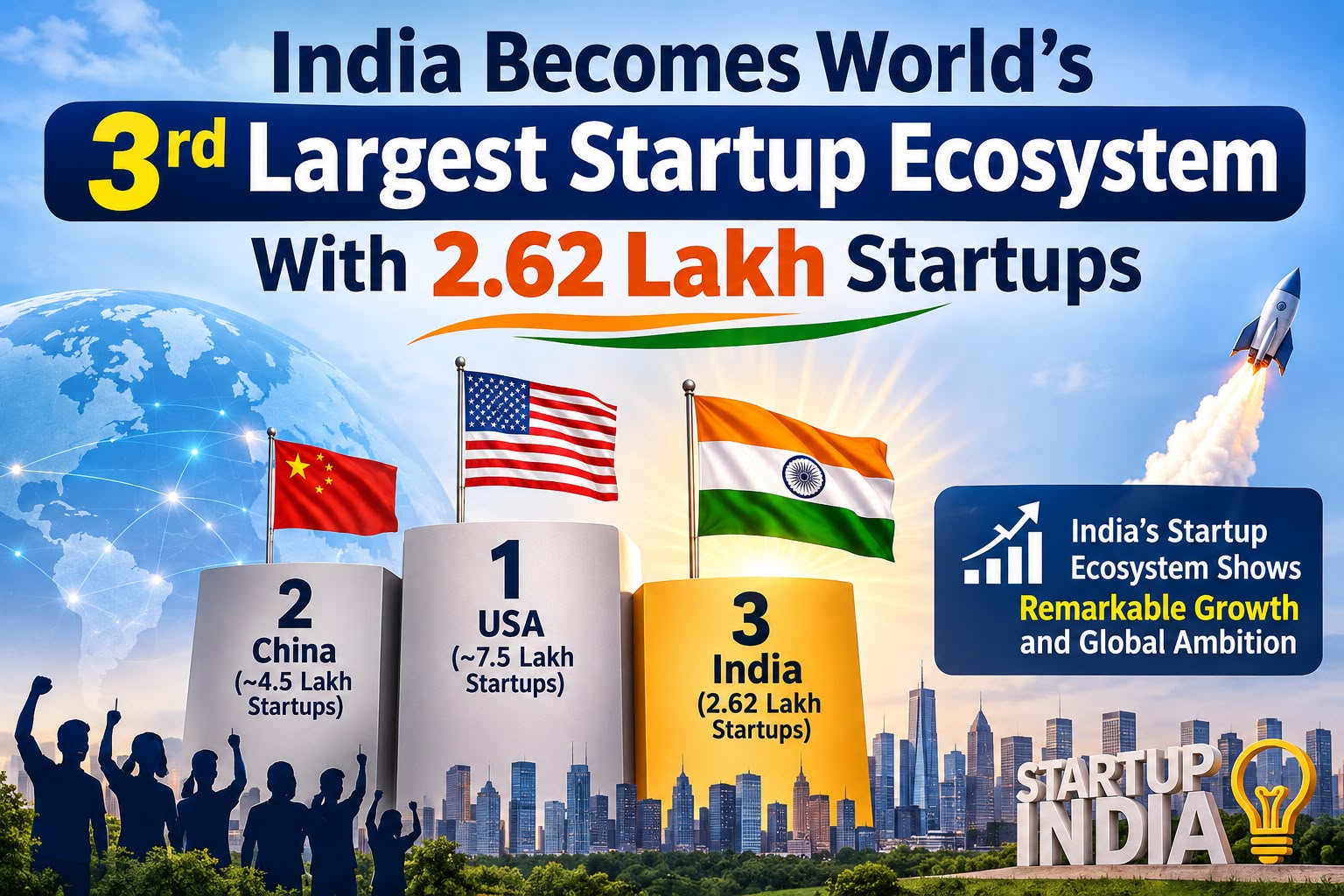
India Becomes World's Third-Largest Startup Ecosystem: Over 2.62 Lakh Startups Recognised, Millions of Jobs Created
India has emerged as the world's third-largest startup ecosystem, marking a significant milestone in its journey towards becoming a global hub for entrepreneurship, innovation and technology. With more than 2.62 lakh startups recognised by the Department for Promotion of Industry and Internal Trade (DPIIT), the country is witnessing an extraordinary transformation in its business landscape.
The growth of India's startup ecosystem reflects the increasing entrepreneurial ambitions of young Indians, rapid digitalisation, supportive government policies and growing investor interest. From financial technology and artificial intelligence to renewable energy, electric vehicles, healthcare and manufacturing, Indian startups are expanding across multiple industries.
This development is not just about the increasing number of new businesses. It also highlights India's growing ability to create employment opportunities, develop indigenous technologies and build companies capable of competing in international markets.
India's Startup Ecosystem at a Glance
- Global Ranking: Third-largest startup ecosystem in the world.
- Recognised Startups: More than 2.62 lakh DPIIT-recognised startups.
- Employment Generation: More than 23 lakh direct jobs.
- Women Entrepreneurship: Over 1.07 lakh recognised startups have at least one woman director or partner.
- New Recognitions: More than 55,200 startups recognised during FY 2025–26.
- Major Initiative: Startup India, launched on January 16, 2016.
These figures demonstrate the growing contribution of entrepreneurship to India's economic development.
How India Transformed Into a Global Startup Hub
A decade ago, India's startup ecosystem was significantly smaller, with only a few hundred prominent startups. Entrepreneurship was largely concentrated in major cities such as Bengaluru, Mumbai, Delhi-NCR and Hyderabad.
The launch of the Startup India initiative in January 2016 became an important turning point. The programme aimed to encourage innovation, simplify business regulations, improve access to funding and create a supportive environment for emerging companies.
Since then, India's startup landscape has expanded rapidly.
Affordable internet services, smartphone adoption, digital payment infrastructure and the increasing availability of technology have made it easier for entrepreneurs to establish businesses and reach customers across the country.
The expansion of UPI, digital banking, e-commerce and cloud-based services has further accelerated the growth of technology-driven businesses.
Today, startups are developing solutions not only for India's urban consumers but also for rural communities, small businesses, farmers and traditional industries.
Startup India Initiative: Government Support for Entrepreneurs
The Startup India initiative has played an important role in strengthening the country's entrepreneurial environment.
Through various policies and programmes, the government aims to reduce the difficulties faced by new businesses and encourage innovation.
Some important areas of support include:
1. DPIIT Recognition
Eligible startups can obtain recognition from the Department for Promotion of Industry and Internal Trade. This recognition can help businesses access applicable government benefits and startup support programmes.
2. Tax Benefits
Eligible startups can receive specified tax exemptions under applicable provisions, subject to prescribed conditions and approvals.
3. Funding Opportunities
Government-backed funding initiatives and investment support programmes aim to improve access to capital for eligible early-stage and growth-stage businesses.
4. Intellectual Property Protection
Eligible startups can receive support for patent and trademark applications, helping entrepreneurs protect their innovations and intellectual property.
5. Incubation and Mentorship
Startup incubators, accelerators and innovation centres provide business guidance, infrastructure, networking opportunities and mentorship.
Together, these initiatives are helping create a stronger foundation for entrepreneurship in India.
Startups Become an Important Source of Employment
Employment generation is one of the biggest contributions of India's expanding startup ecosystem.
According to government figures, DPIIT-recognised startups had generated more than 23.36 lakh direct jobs as of March 31, 2026.
During FY 2025–26, more than 55,200 startups received DPIIT recognition, representing the highest annual number since the launch of the Startup India initiative.
Startups are creating employment opportunities across several professional categories, including software development, engineering, sales, marketing, operations, finance, logistics and business management.
The growth of startups is also creating indirect employment through vendors, service providers, distributors, contractors and other business partners.
For India's young workforce, this expansion provides opportunities to work in emerging industries and develop skills that are increasingly important in the global economy.
Women Entrepreneurs Strengthen India's Startup Ecosystem
Women's participation has become another important feature of India's startup growth story.
Government data indicates that more than 1.07 lakh DPIIT-recognised startups had at least one woman director or partner as of March 31, 2026.
This represents approximately 48% of recognised startups.
Women entrepreneurs are increasingly establishing businesses in technology, education, healthcare, financial services, retail, agriculture and consumer products.
Greater access to digital platforms, mentorship, funding opportunities and entrepreneurship networks is helping women participate more actively in India's business environment.
This growing participation is important for building a more inclusive and diversified economy.
Startup Revolution Expands Beyond Metropolitan Cities
One of the most encouraging developments is the expansion of startups beyond traditional business centres.
Earlier, major metropolitan cities dominated India's startup landscape. However, Tier-II and Tier-III cities are now becoming important destinations for entrepreneurs.
Cities such as Jaipur, Indore, Lucknow, Ahmedabad, Coimbatore, Kochi, Chandigarh and Bhubaneswar are witnessing increasing entrepreneurial activity.
Smaller cities offer several advantages, including lower operating costs, access to regional markets and opportunities to solve local problems through innovative business models.
This geographical expansion is also helping distribute employment and economic opportunities across different parts of India.
Six Major Sectors Driving India's Startup Growth
India's startup ecosystem is expanding across traditional industries as well as emerging technology sectors.
1. Financial Technology (Fintech)
Fintech has become one of India's most important startup segments. Digital payments, online lending, insurance technology, wealth management and financial inclusion platforms are changing the way individuals and businesses access financial services.
The expansion of UPI and digital banking has created opportunities for companies developing innovative financial products.
2. Renewable Energy and Clean Technology
Renewable energy is emerging as an important opportunity for Indian entrepreneurs.
Startups are developing solutions in solar power, battery storage, energy management, smart grids, energy efficiency and electric mobility.
The growing demand for clean energy, combined with India's renewable energy ambitions, is creating opportunities for technology providers, installation companies, engineering firms and infrastructure developers.
3. Electric Vehicles and Charging Infrastructure
India's electric mobility sector is creating new business opportunities beyond vehicle manufacturing.
EV charging station installation, charger maintenance, battery management, fleet electrification and charging network management are becoming important areas of entrepreneurial activity.
As electric vehicle adoption increases, the demand for reliable charging infrastructure and after-sales services is expected to create further opportunities.
4. Artificial Intelligence and Deep Technology
Artificial intelligence is opening a new chapter in India's startup journey.
Indian companies are developing AI-powered applications, business automation platforms, enterprise software, robotics, cybersecurity solutions and data analytics products.
Deep technology startups working in semiconductors, space technology and advanced computing could also strengthen India's position in the global innovation economy.
5. Healthcare and Biotechnology
Healthcare startups are using technology to improve access to medical services.
Telemedicine, digital diagnostics, medical devices, healthcare management software and biotechnology are attracting entrepreneurial interest.
These innovations can help improve healthcare accessibility, particularly in underserved regions.
6. Agriculture and Agritech
Agriculture remains a significant part of India's economy, creating opportunities for technology-based businesses.
Agritech startups are developing solutions involving precision farming, crop monitoring, agricultural marketplaces, supply-chain management and farm productivity.
These businesses can help farmers improve efficiency and access wider markets.
India's Growing Unicorn Ecosystem
A unicorn is a privately held startup valued at $1 billion or more.
India has developed a significant unicorn ecosystem over the past decade, with companies emerging across fintech, e-commerce, software, mobility, logistics and consumer technology.
Indian unicorns have demonstrated that domestic businesses can develop innovative products, attract international investment and expand into large markets.
However, the next phase of startup development will require greater emphasis on profitability, sustainable business models, technological innovation and long-term value creation.
Challenges That Indian Startups Must Overcome
Despite the impressive expansion, building a successful startup remains challenging.
Access to funding continues to be a major concern for many early-stage businesses, particularly those operating outside established startup hubs.
Other challenges include:
- High operating costs and cash-flow management.
- Increasing competition from established companies.
- Difficulty attracting and retaining skilled employees.
- Regulatory and compliance requirements.
- Limited access to growth-stage funding.
- Challenges in expanding from regional markets to national and international markets.
For the ecosystem to mature, startups will need to focus on sustainable revenue, operational efficiency, customer satisfaction and long-term financial stability.
What India's Startup Growth Means for the Economy
The expansion of India's startup ecosystem has implications beyond entrepreneurship.
Startups can contribute to economic growth by creating employment, introducing new technologies, improving productivity and encouraging competition.
Businesses operating in manufacturing, renewable energy, electric mobility, infrastructure and digital services can also support India's broader industrial development.
For example, the growth of solar energy startups and EV infrastructure companies can contribute to clean-energy adoption while generating employment for engineers, technicians, installation teams and service providers.
Similarly, technology startups can help traditional industries modernise their operations and improve efficiency.
This combination of innovation, employment and industrial development makes startups an important part of India's long-term economic ambitions.
Future Outlook: Can India Become the World's Second-Largest Startup Ecosystem?
India's third-place global ranking is an important achievement, but the country's entrepreneurial journey is far from complete.
The next stage of growth will depend on the ability of Indian startups to develop globally competitive products, attract long-term investment and establish sustainable business models.
Artificial intelligence, semiconductor manufacturing, biotechnology, renewable energy, electric mobility and advanced manufacturing could become major growth drivers.
Greater investment in research and development, stronger university-industry partnerships and improved access to funding will also be essential.
India has the market size, entrepreneurial talent and digital infrastructure to strengthen its global position further.
The challenge now is to transform the growing number of startups into successful, innovative and financially sustainable businesses.
Conclusion
India's emergence as the world's third-largest startup ecosystem, with more than 2.62 lakh DPIIT-recognised startups, represents a major milestone in the country's economic transformation.
From approximately 500 startups in 2014 to more than 2.62 lakh recognised businesses today, India's entrepreneurial landscape has experienced remarkable expansion.
The creation of millions of direct jobs, increasing participation of women entrepreneurs and the growth of startups in smaller cities demonstrate the wider economic impact of this transformation.
With opportunities emerging in artificial intelligence, renewable energy, electric vehicles, healthcare, fintech and manufacturing, India's startup ecosystem is entering an important new phase.
The real measure of its success will be the ability to convert innovation into sustainable businesses, meaningful employment and globally competitive Indian companies.
India's startup story is no longer just about launching new businesses. It is increasingly about building the technologies, industries and enterprises that will shape the country's economic future.
What's Hot
-

India WTC Final 2027 Qualification Chances: What Team India Needs
-

India Score 720/9 vs New Zealand: Highest Away Test Total, Historic Record
-

Georgia Beats South Carolina 34-6 to Clinch 2026 SEC Championship Berth
-

PM E-DRIVE Scheme Crosses 30 Lakh EV Sales Milestone
-
PM Modi's FICCI Speech 2026: Listen to Gandhi, Promote Swadeshi and Make India Self-Reliant
-

Trump, Xi and Putin Summit 2026: Key Agenda, Nuclear Weapons, Iran War and Ukraine
-

EV Sales Surge 69% in India During 2026 Festive Season
-
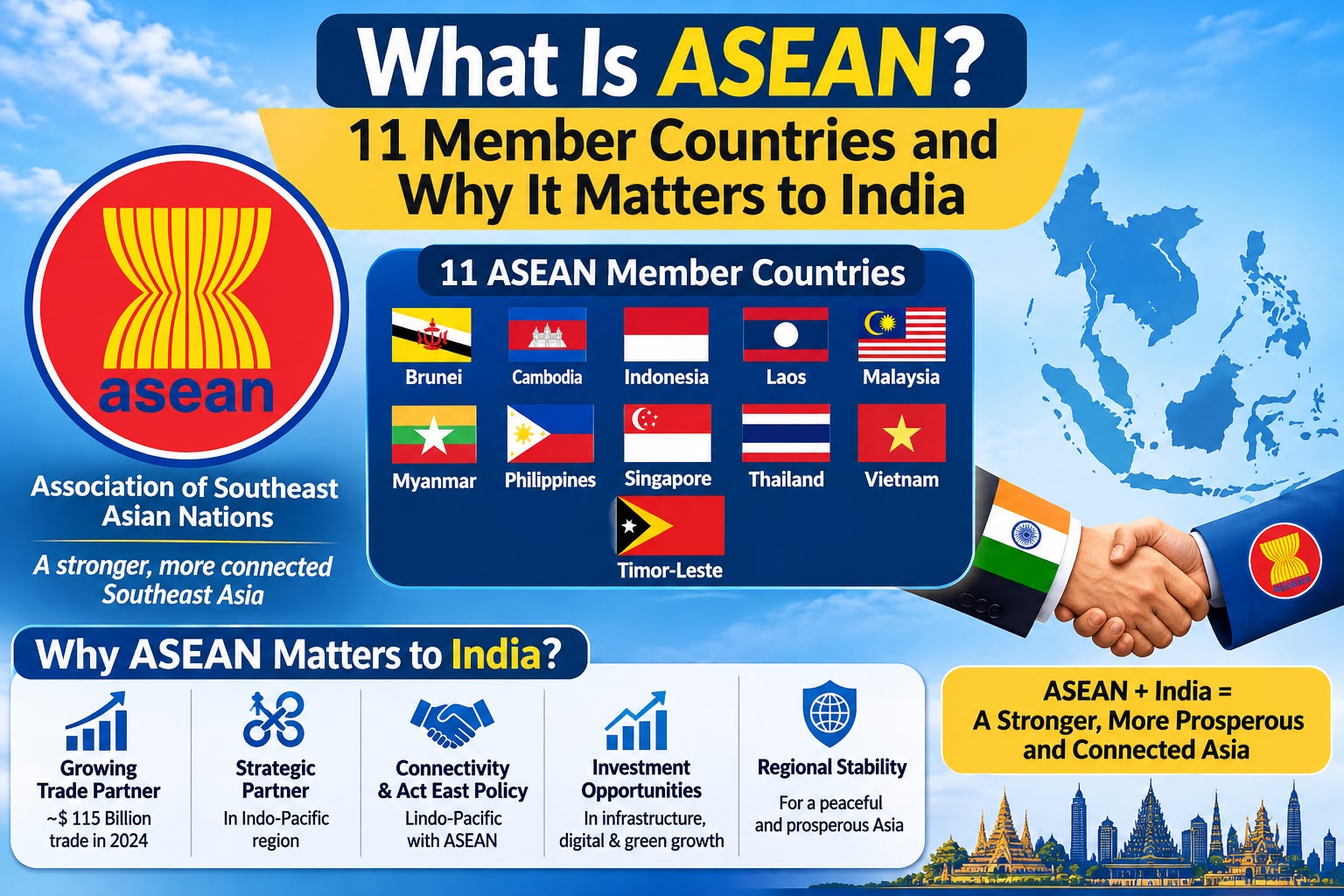
What Is ASEAN? 11 Member Countries and Why It Matters to India
-

India vs New Zealand 4th ODI: India Bowled Out for 89, Lose by 244 Runs
-
PM Modi to Launch Rs.15,600 Crore Development Projects in Bengaluru Today