

Asian Games 2026: India Finishes With 85 Medals — What It Means for the 2028 Olympics
Asian Games 2026: India Finishes With 85 Medals — What It Means for the 2028 Olympics
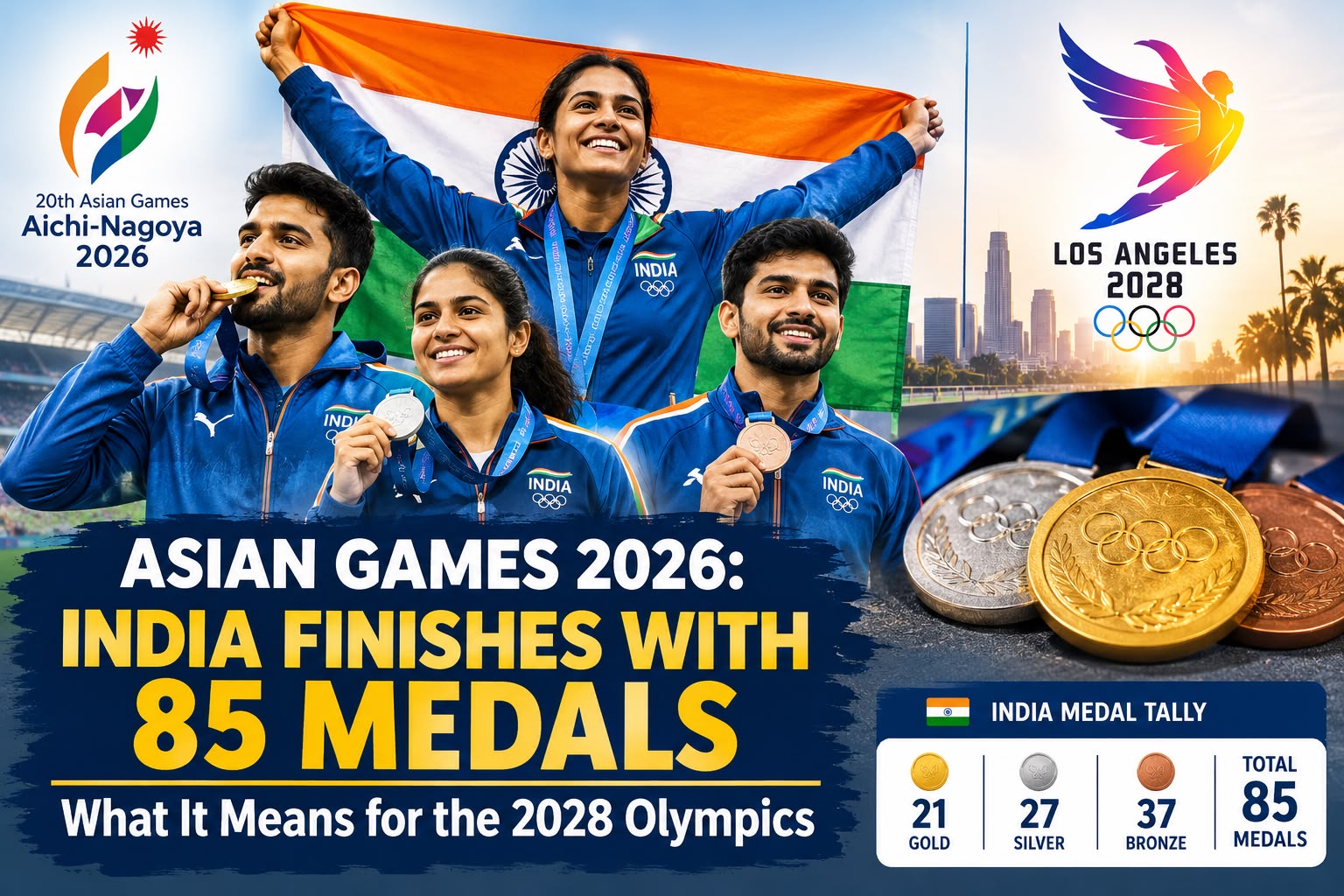
India ended its campaign at the Aichi-Nagoya Asian Games 2026 with 85 medals, including 21 gold, 27 silver and 37 bronze, finishing fourth in the overall medal standings. The performance makes the 2026 Asian Games India's second-best medal haul in the history of the continental competition and provides several important indicators ahead of the Los Angeles 2028 Olympic Games.
Although India's total was below its record performance at the previous Asian Games, the 2026 campaign produced several historic achievements, Olympic qualification breakthroughs and strong performances across a wider range of sports.
India Asian Games 2026 Medal Tally
|
Medal |
Number |
|
Gold |
21 |
|
Silver |
27 |
|
Bronze |
37 |
|
Total |
85 |
|
Overall Rank |
4th |
India finished behind China, Japan and South Korea in the final medal standings. The Indian contingent's 85-medal haul included strong performances in athletics, shooting, archery, boxing, wrestling and team sports.
How Does India's 2026 Performance Compare With 2022?
India won 106 medals at the Hangzhou Asian Games, including 28 gold medals. The 2026 tally of 85 medals therefore represents a decline in the overall medal count as well as gold medals.
However, the result should not be viewed only through the total medal number.
India continued to finish inside the top four, while athletes produced important breakthroughs in several disciplines. The 2026 Games also showed that India's medal base is becoming increasingly diverse.
Which Sports Performed Best for India?
Athletics Leads India's Medal Count
Athletics was India's biggest contributor by total medals, producing 24 medals. However, the relatively small number of gold medals in athletics also highlights an area where India needs to improve before the Olympics.
At the Olympic level, converting silver and bronze performances into gold-medal contention will be critical.
Archery Emerges as a Major Olympic Hope
Archery was one of India's biggest success stories in Aichi-Nagoya.
Indian archers won nine medals, including five gold medals. India also achieved historic results in recurve archery, including Kumkum Mohod's individual gold and a landmark women's recurve team victory.
The performance is particularly significant because archery will be one of India's important medal prospects at Los Angeles 2028. Indian archers also secured Olympic qualification opportunities through their Asian Games performance.
Shooting Remains a Key Medal Sport
Shooting contributed 15 medals, including three golds.
India has traditionally depended heavily on shooting for Olympic medals, and the sport will remain central to the country's LA 2028 ambitions.
The challenge now is to ensure that Asian Games performers maintain their form at World Cups, World Championships and Olympic qualification events.
Boxing Shows Strong Potential
Indian boxers won six medals, including three gold medals.
Lovlina Borgohain, Parveen Hooda and Ankush were among India's gold medallists. The performance provides renewed optimism after India's mixed results in recent Olympic boxing campaigns.
With continued international exposure and high-quality preparation, boxing could become one of India's strongest medal opportunities in Los Angeles.
Wrestling Continues to Deliver
India also won six wrestling medals, including two gold medals.
Aman Sehrawat and Sujeet emerged as gold-medal winners, providing a positive signal for Indian wrestling.
Wrestling has historically been one of India's most reliable Olympic sports, and its performance in Nagoya could provide the foundation for another strong Olympic campaign.
Hockey Provides India's Biggest Olympic Qualification Boost
One of the most important outcomes of the Asian Games was India's success in hockey.
The Indian men's and women's hockey teams both won Asian Games gold medals and secured direct qualification for the Los Angeles 2028 Olympics.
The men's team defeated Malaysia 5–1 in the final to successfully defend its Asian Games title and book its direct Olympic berth.
The women's team also defeated China to win gold and secure direct qualification for LA 2028, ending a 44-year wait for Asian Games women's hockey gold.
This is a major advantage for India because it means both hockey teams can now focus their preparations specifically on the Olympic tournament rather than having to navigate additional qualification events.
Cricket and Kabaddi Add More Gold
India also achieved gold-medal success in both men's and women's cricket, as well as men's and women's kabaddi.
These victories underline India's strength in team sports at the Asian level.
However, their relevance to the Olympics needs to be considered separately because the Olympic programme is different from the Asian Games programme.
What Does the Asian Games Result Mean for LA 2028?
The Asian Games are not a direct predictor of Olympic medals because the Olympics feature a much broader global field.
Nevertheless, the results provide several important signals.
1. India Already Has Hockey Qualification
Both Indian hockey teams have secured their places at LA 2028.
This gives the teams almost two years to concentrate on preparation, tactical development and international competition.
2. Archery Could Become a Major Medal Contributor
The five archery gold medals in Nagoya demonstrate India's growing strength in the discipline.
If this form continues at the World Championships and Olympic qualification events, archery could potentially become one of India's biggest medal-producing sports in Los Angeles.
3. India Needs to Convert More Silvers Into Golds
India's 27 silver medals are both encouraging and revealing.
They show that Indian athletes are regularly reaching medal-winning stages, but many are still falling short of the top position.
Improving performance in high-pressure finals could make a significant difference at the Olympics.
4. Athletics Needs Greater Olympic Conversion
Winning 24 athletics medals at the Asian Games is impressive, but Asian Games success does not automatically translate into Olympic success.
India needs to close the performance gap with the world's best athletes, particularly in events where the global field is much stronger.
5. Medal Opportunities Are Becoming More Diverse
Perhaps the most encouraging development is that India is no longer dependent on just a handful of sports.
The 2026 campaign produced medals across:
- Athletics
- Shooting
- Archery
- Boxing
- Wrestling
- Hockey
- Cricket
- Kabaddi
- Golf
- Rowing
- MMA
- Sepaktakraw
This diversification gives India a larger pool of potential Olympic medal contenders.
India’s Road to Los Angeles 2028
The next two years will be crucial.
The pathway from the Asian Games to the Olympics can broadly be viewed as:
Asian Games performance → World-level competition → Olympic qualification → LA 2028 preparation → Olympic medals
The Asian Games have provided confidence, but athletes will now need to demonstrate that they can compete against the best performers from Europe, the Americas, Africa and Oceania.
Can India Win More Olympic Medals in 2028?
India's 2026 Asian Games performance provides reasons for optimism, but it also highlights areas that need improvement.
The strongest Olympic prospects currently appear to be in shooting, archery, boxing, wrestling and hockey, while athletics and several emerging sports could provide additional opportunities.
The biggest challenge will be converting India's large number of Asian-level podium finishes into medals on the world's biggest sporting stage.
Conclusion
India's 85-medal haul at the Asian Games 2026 represents a significant achievement despite being below the previous Asian Games total.
The 21 gold, 27 silver and 37 bronze medals demonstrate that India remains one of Asia's leading sporting nations.
More importantly, the Games have created momentum for the Los Angeles 2028 Olympics. Direct qualification for both hockey teams, the breakthrough performance in archery, strong results in boxing and wrestling, and a broad medal spread across multiple disciplines provide India with a strong foundation.
The real test, however, will come in Los Angeles.
If India can build on the lessons from Aichi-Nagoya, improve its conversion of silver medals into gold, strengthen Olympic qualification campaigns and maintain athlete preparation at the world level, the country could enter LA 2028 with ambitions of achieving one of its strongest-ever Olympic medal performances.
For Indian sport, the message from Aichi-Nagoya is clear: the foundation is strong, but the next two years will determine how far that momentum can go on the Olympic stage.
What's Hot
-
India WTC Final 2027 Qualification Chances: What Team India Needs
-
India Score 720/9 vs New Zealand: Highest Away Test Total, Historic Record
-
Georgia Beats South Carolina 34-6 to Clinch 2026 SEC Championship Berth
-

PM E-DRIVE Scheme Crosses 30 Lakh EV Sales Milestone
-
PM Modi's FICCI Speech 2026: Listen to Gandhi, Promote Swadeshi and Make India Self-Reliant
-
Trump, Xi and Putin Summit 2026: Key Agenda, Nuclear Weapons, Iran War and Ukraine
-

EV Sales Surge 69% in India During 2026 Festive Season
-
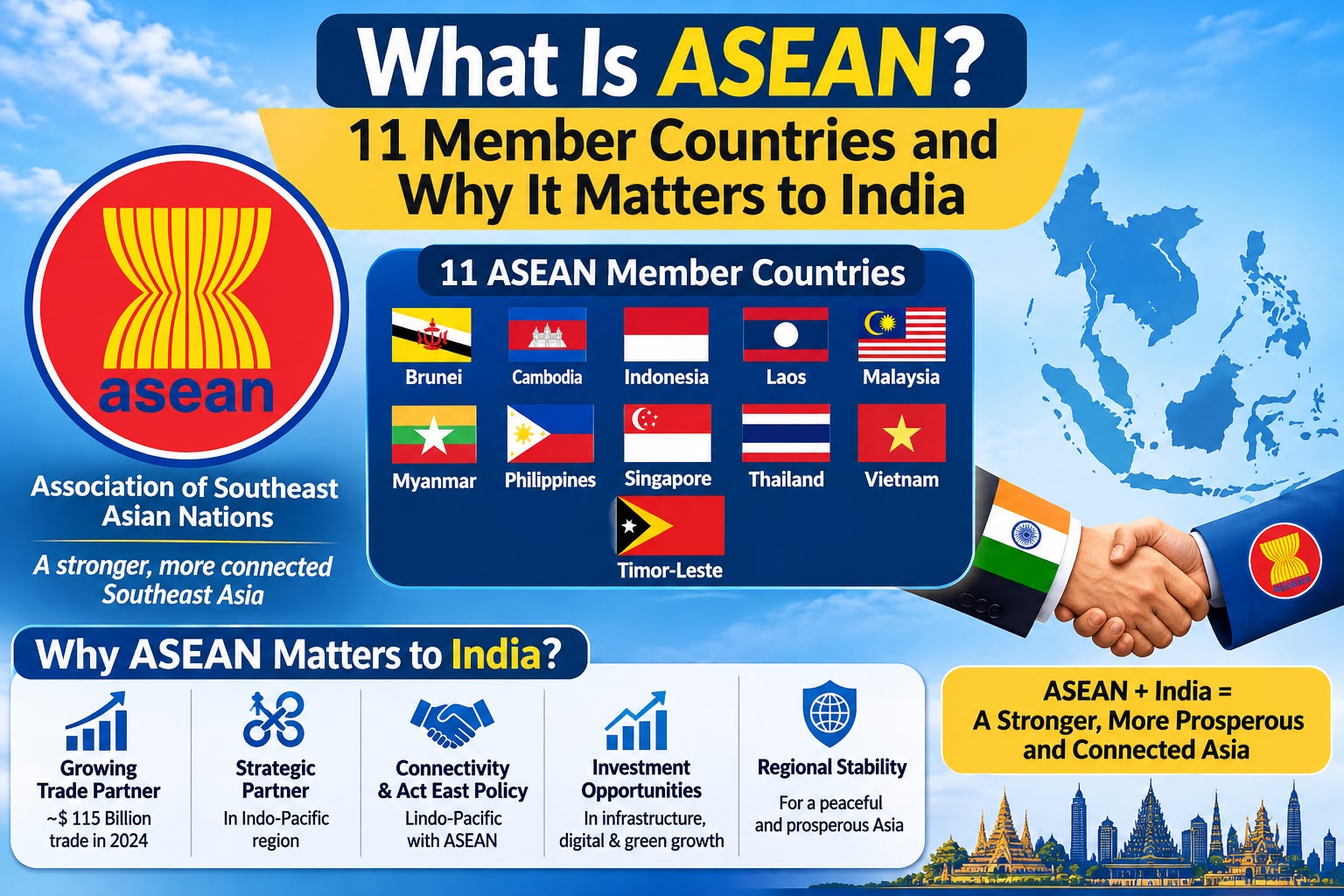
What Is ASEAN? 11 Member Countries and Why It Matters to India
-
India vs New Zealand 4th ODI: India Bowled Out for 89, Lose by 244 Runs
-
PM Modi to Launch Rs.15,600 Crore Development Projects in Bengaluru Today