

Halloween 2026: History, Significance and What It Means for India
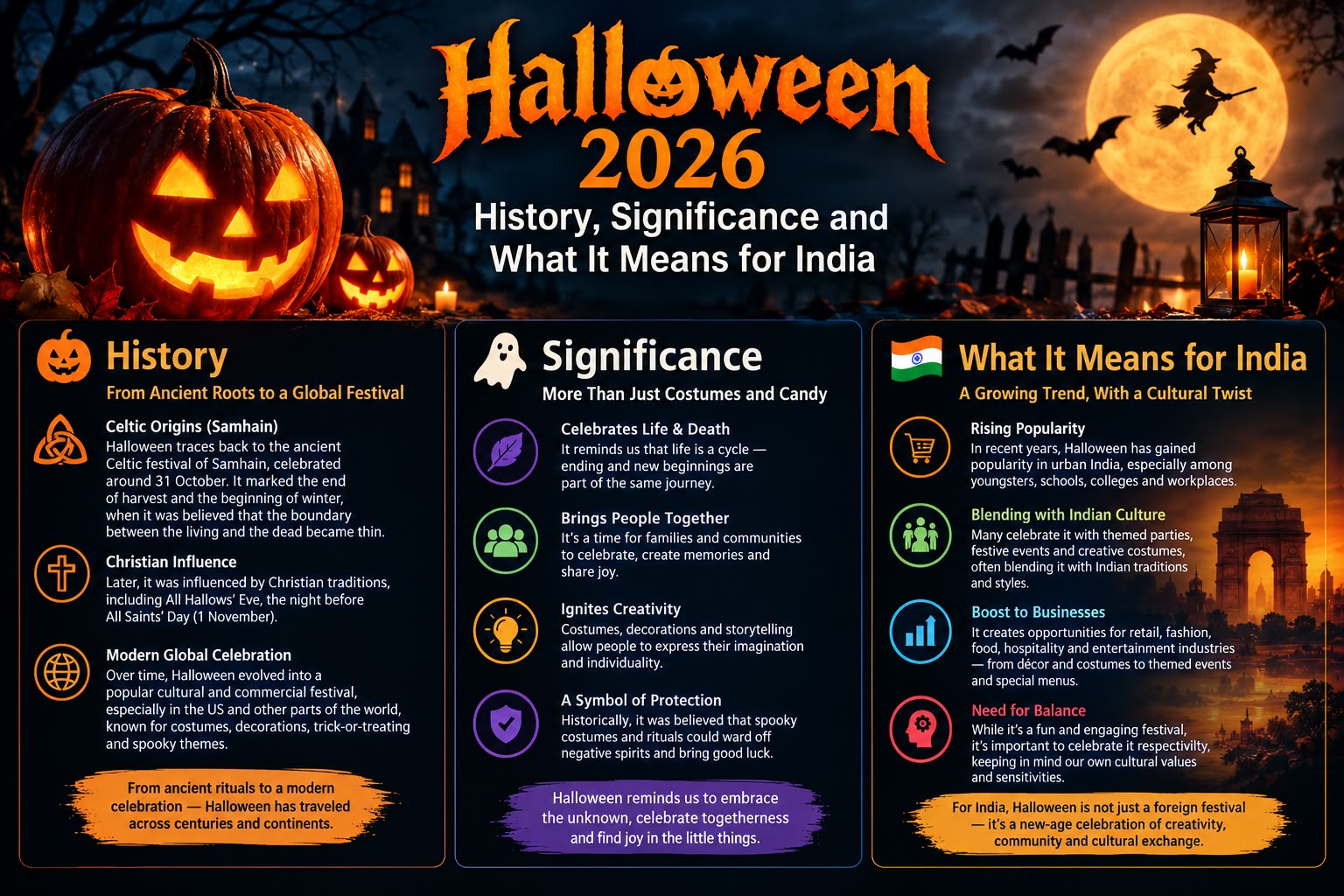
Halloween 2026: What Is Halloween, Why Is It Celebrated on October 31, and What Does It Mean for India?
Halloween 2026: Halloween will be celebrated on Saturday, October 31, 2026, across many countries, including the United States, Canada, Ireland, and the United Kingdom. Known for spooky costumes, carved pumpkins, trick-or-treating, and themed parties, Halloween has become one of the most recognisable cultural celebrations around the world. Although it is not a traditional Indian festival, Halloween has gained visibility in India, particularly among young people and urban audiences.
As global culture continues to influence entertainment, fashion, social media, and consumer trends, Halloween is finding its place in India's urban celebrations. But what is the real meaning of Halloween? Why do people celebrate it, and how is the occasion relevant to India?
Here is everything you need to know about Halloween 2026, including its history, traditions, significance, and growing popularity in India.
What Is Halloween?
Halloween is an annual celebration observed on October 31. The festival has historical roots in ancient Celtic traditions and is now widely associated with costumes, spooky decorations, pumpkin carving, parties, and activities involving ghosts and supernatural characters.
The word Halloween is derived from "All Hallows' Eve", referring to the evening before All Saints' Day, which is observed on November 1 in several Christian traditions.
Over time, Halloween developed into a cultural celebration that combines historical customs with modern entertainment. Today, millions of people participate in Halloween activities, although the way it is celebrated differs from country to country.
For many people, Halloween is no longer primarily a religious occasion. Instead, it is an opportunity to dress up, enjoy themed events, decorate homes, watch horror movies, and spend time with friends and family.
When Is Halloween 2026?
Halloween is celebrated on October 31 every year.
In 2026, Halloween falls on Saturday, October 31, making it convenient for people to organise weekend parties, costume competitions, family activities, and special entertainment events.
The celebration is particularly popular in North America and parts of Europe. In India, Halloween-related events are generally organised by individual schools, restaurants, hotels, entertainment venues, and private groups rather than through nationwide celebrations.
Why Is Halloween Celebrated?
Halloween has its roots in the ancient Celtic festival of Samhain, which marked the end of the harvest season and the beginning of winter.
Samhain was traditionally observed in parts of Ireland, Britain, and other Celtic regions. Historical accounts associate the festival with beliefs about spirits and the changing seasons.
As Christianity spread through Europe, different traditions surrounding the end of October and the beginning of November evolved and influenced one another. Over several centuries, these customs helped shape the Halloween celebration recognised today.
Halloween later became particularly popular in the United States, where traditions such as trick-or-treating, costume parties, pumpkin carving, and elaborate decorations developed into mainstream activities.
Today, Halloween is celebrated primarily as a cultural and entertainment event by many participants.
Popular Halloween Traditions Around the World
Halloween is celebrated through a variety of activities. Some of its best-known traditions include the following.
1. Wearing Halloween Costumes
Costumes are among the most recognisable features of Halloween. People dress as witches, vampires, ghosts, skeletons, superheroes, fictional characters, and other imaginative figures.
While scary costumes remain popular, many people also choose humorous outfits or characters from films, television series, and video games.
Costume parties and competitions are common features of modern Halloween celebrations.
2. Trick-or-Treating
Trick-or-treating is a popular Halloween tradition, particularly in the United States and Canada.
Children dress up in costumes and visit homes in their neighbourhoods, asking for sweets and chocolates. Participating households distribute treats, making the activity a familiar part of the celebration.
This tradition is not widely established across India, although some schools, residential communities, and private events may organise similar activities.
3. Pumpkin Carving
Carved pumpkins, commonly called jack-o'-lanterns, are another symbol of Halloween.
People carve faces or creative designs into pumpkins and place lights inside them. These illuminated decorations are displayed outside homes, at parties, and in public spaces.
In India, Halloween decorations may also use paper pumpkins, artificial props, lanterns, and other locally available materials.
4. Spooky Decorations
Homes, restaurants, shops, and entertainment venues may be decorated with artificial cobwebs, skeletons, bats, ghosts, witches, and haunted-house themes.
These decorations help create a distinctive atmosphere for Halloween parties and public events.
5. Halloween Parties and Horror Movies
Halloween is also associated with costume parties, themed music events, horror-film screenings, and other entertainment activities.
Many people use the occasion to watch horror movies, organise games, create themed food, or meet friends.
These modern activities have helped Halloween become a significant seasonal entertainment event in several countries.
What Does Halloween Mean for India?
Halloween is not a traditional Indian festival like Diwali, Holi, or Dussehra. Nevertheless, it has gradually become more visible in certain Indian cities through international entertainment, social media, themed events, and changing consumer interests.
In India, Halloween is best understood as an optional cultural and entertainment occasion rather than a major religious or national celebration.
Halloween Celebrations in Indian Cities
In cities such as Mumbai, Delhi, Bengaluru, Pune, and Goa, some entertainment venues, restaurants, hotels, and private organisers host Halloween-themed events.
These may include costume parties, themed dinners, horror-movie screenings, music events, and family activities.
The scale of celebrations varies by location and organiser. Halloween is not celebrated uniformly across the country.
Halloween in Schools and Among Children
Some schools, preschools, and activity centres organise Halloween-themed dress-up days, storytelling sessions, art competitions, and craft activities.
Children may dress as fictional characters, create paper pumpkins, or participate in games designed around the occasion.
Such activities are generally intended to encourage creativity and participation rather than to promote any particular religious belief.
Halloween and Social Media in India
Social media has helped introduce Halloween traditions to Indian audiences.
People may share costume photographs, makeup tutorials, themed videos, decorations, and party experiences on platforms such as Instagram.
For younger audiences, Halloween can be an opportunity to experiment with fashion, makeup, photography, and creative content.
However, the popularity of Halloween-related content online should not be taken as evidence that it has become a mainstream festival throughout India.
Conclusion
Halloween 2026 will take place on Saturday, October 31, bringing costumes, spooky decorations, pumpkin carving, and themed entertainment to celebrations around the world.
What's Hot
-

India WTC Final 2027 Qualification Chances: What Team India Needs
-
India Score 720/9 vs New Zealand: Highest Away Test Total, Historic Record
-
Georgia Beats South Carolina 34-6 to Clinch 2026 SEC Championship Berth
-

PM E-DRIVE Scheme Crosses 30 Lakh EV Sales Milestone
-
PM Modi's FICCI Speech 2026: Listen to Gandhi, Promote Swadeshi and Make India Self-Reliant
-

Trump, Xi and Putin Summit 2026: Key Agenda, Nuclear Weapons, Iran War and Ukraine
-

EV Sales Surge 69% in India During 2026 Festive Season
-

What Is ASEAN? 11 Member Countries and Why It Matters to India
-

India vs New Zealand 4th ODI: India Bowled Out for 89, Lose by 244 Runs
-

PM Modi to Launch Rs.15,600 Crore Development Projects in Bengaluru Today